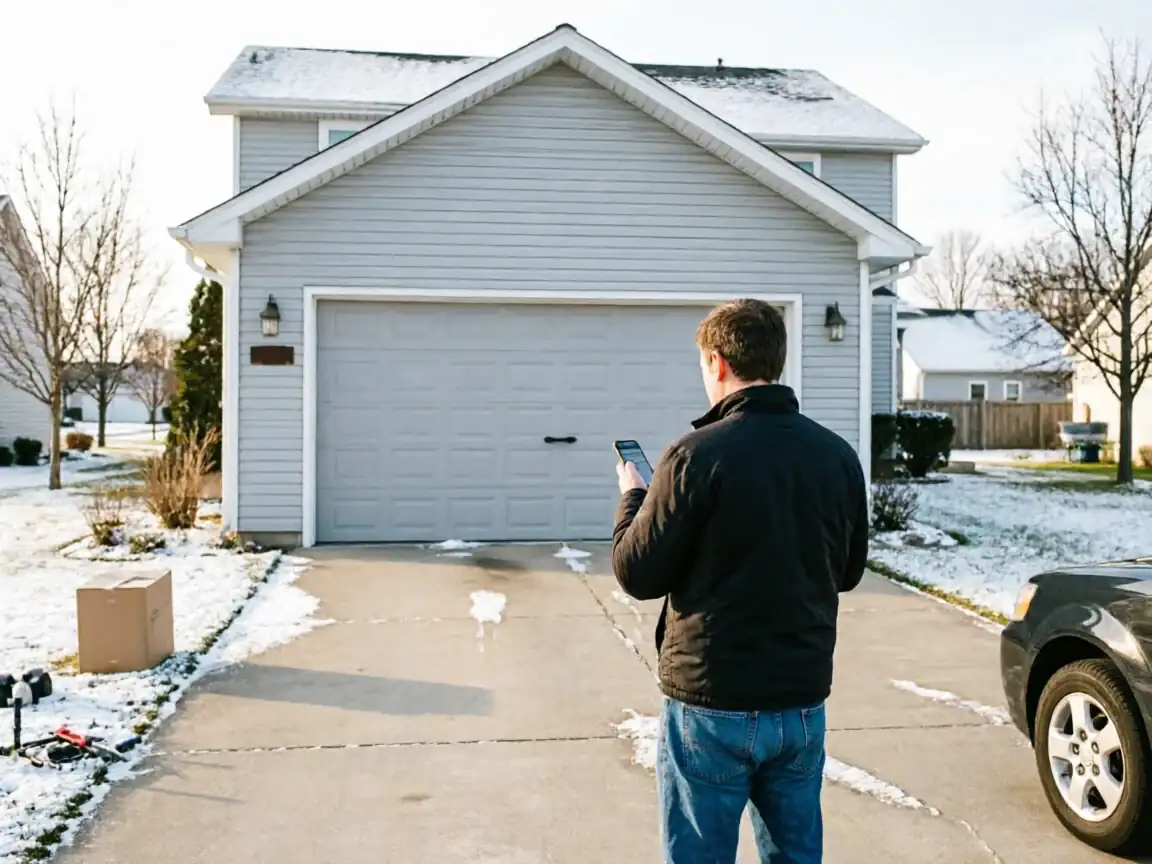
Can You Do This Yourself
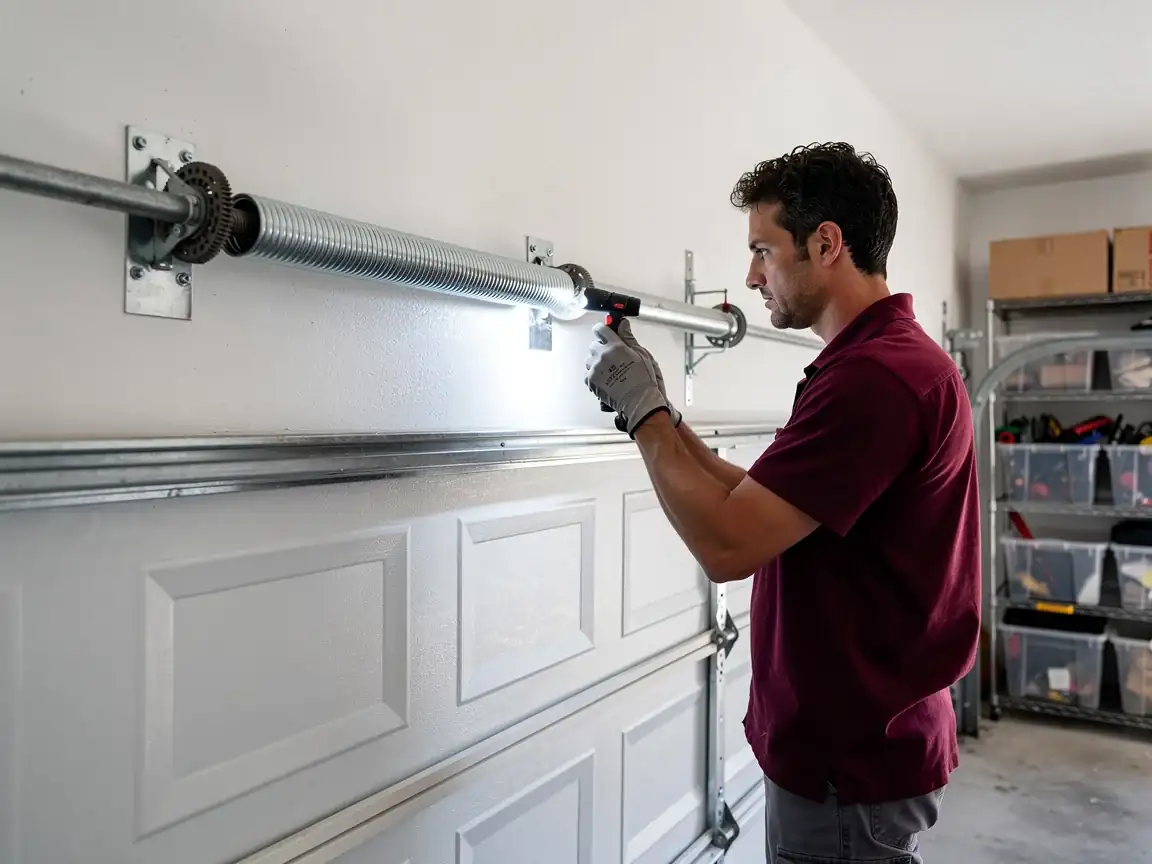
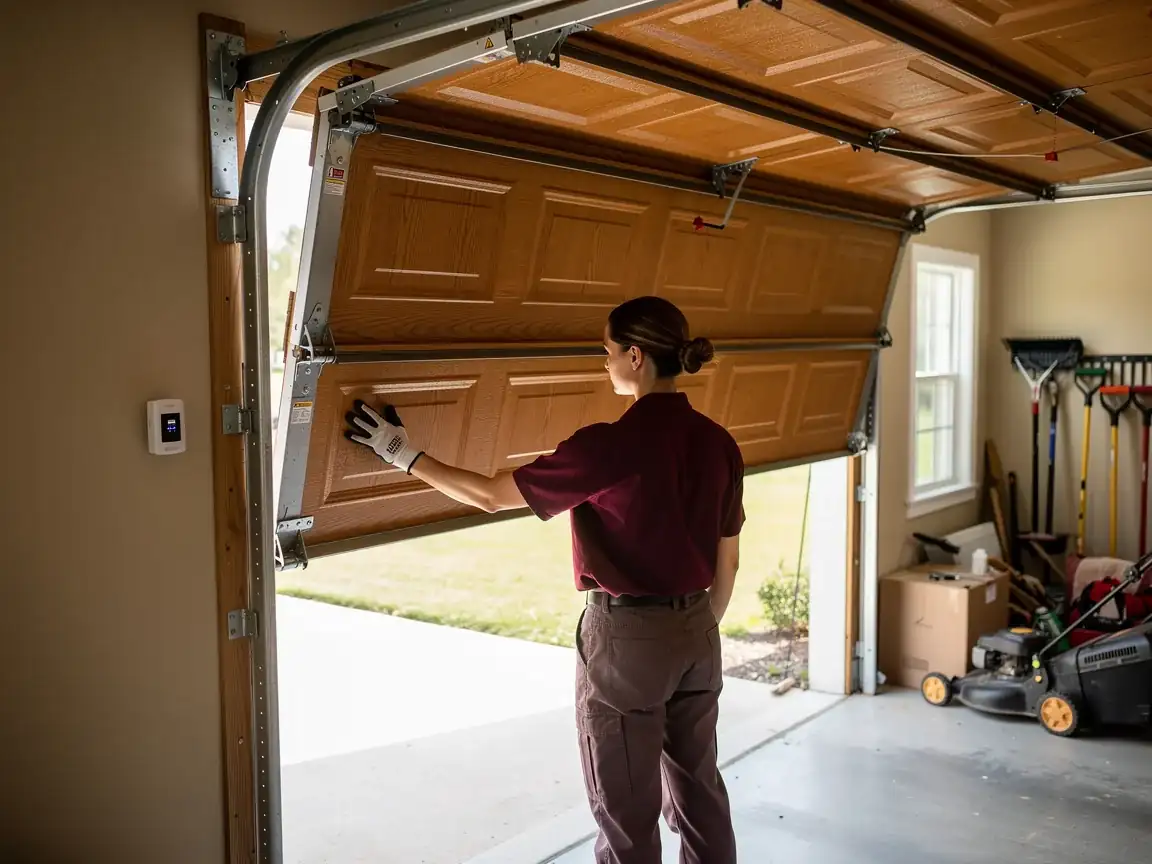
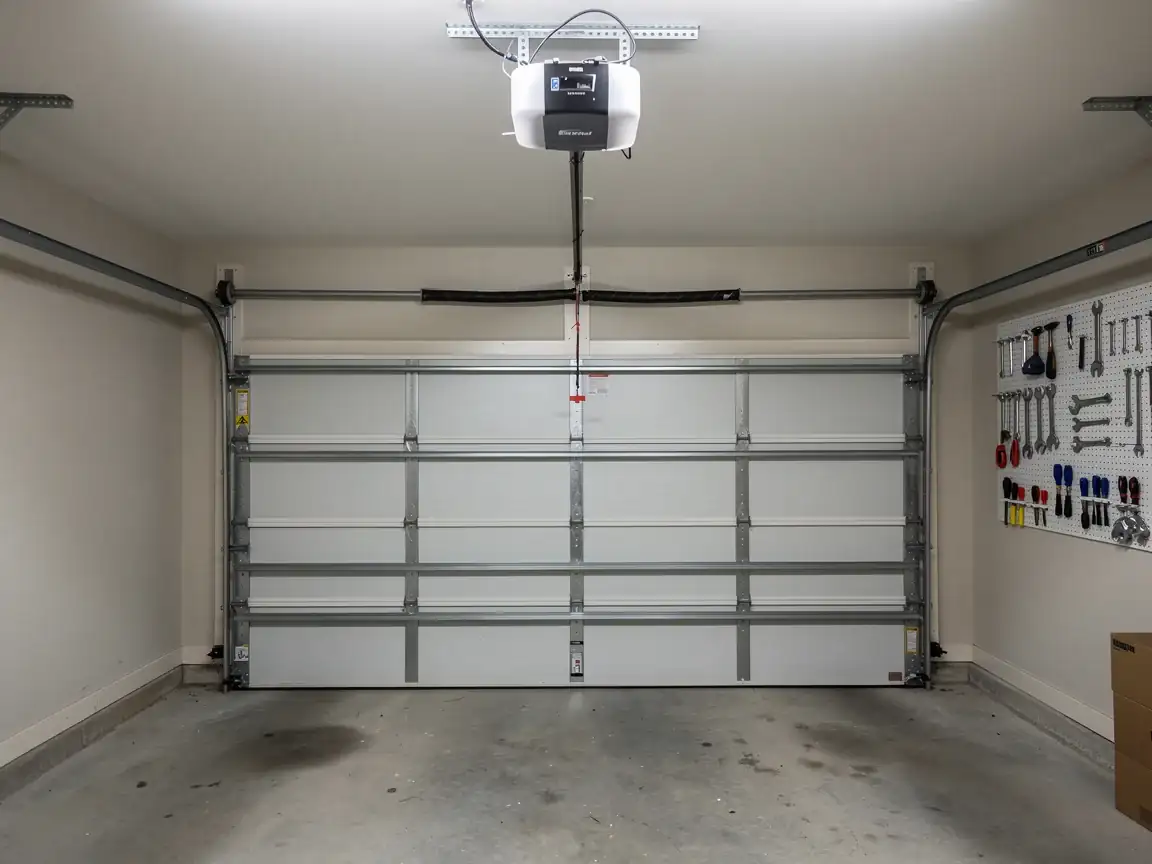
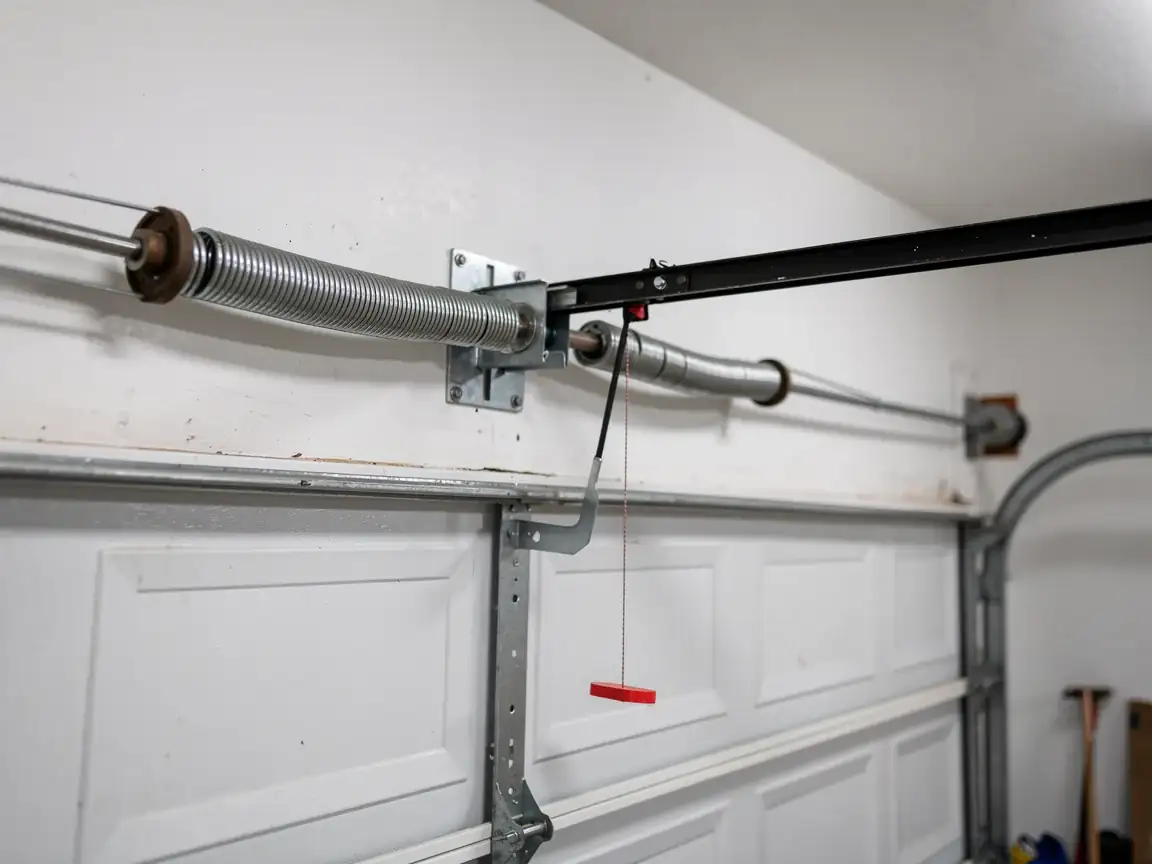
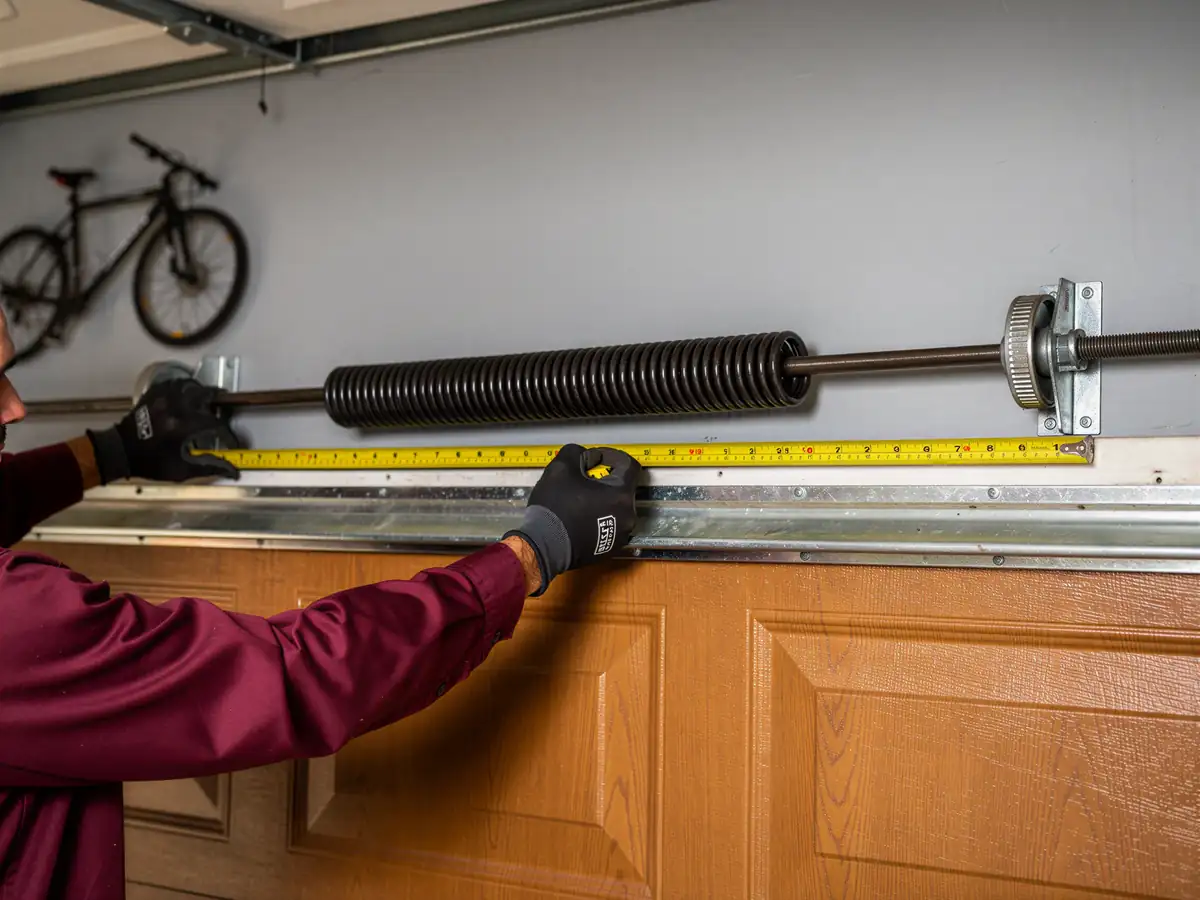
Andover's housing stock centers on 1993, which means most garages here run a steel sectional door on torsion springs mounted on a center shaft above the opening, not the older side-mount extension-spring setups you'd find in a neighborhood built thirty years earlier. That matters for what you can safely touch. If a roller has jumped the track and the door is still sitting level in the opening, you can sometimes walk it back onto the track by hand with the door closed and the opener unplugged. If the bottom panel is cocked, a cable has come off the drum, or the track itself has pulled away from its bracket, stop. A door that's bound up under spring tension doesn't care how new or old the house is, and a 1993-era torsion setup still has enough stored force in that spring to break fingers or worse. We'd rather talk you out of a job over the phone than drive out for something you could've done, but anything involving the spring, the cable drums, or a bent track bracket is ours to handle, not yours.
One honest limit: if the track has been pulled far enough out of square that the wall bracket tore loose from the framing, that's a repair we do, but it sometimes needs more than an afternoon depending on what we find once the track's off.
How It Shows Up
On a 1990s-built Andover garage, off-track trouble usually starts quiet. The door runs a little rough, a roller rattles more on one side than the other, or the door stutters partway through its travel instead of gliding. By the time it's visibly off the track, you'll often see a gap between the roller and the rail on one side, or the bottom corner of the door sitting lower than the other. Minnesota's cold winters are a real factor here: ice buildup in the track or on the rollers can force a roller out of its channel, especially on a door that's been running slightly misaligned for a while already. A door that slams the last foot of travel, or won't latch square against the weatherstrip, is often telling you the track's been nudged out of parallel, not that the opener is failing. Catching it at the rattle stage, before the roller fully derails, is almost always a shorter repair than catching it after the panel's been forced against a bent rail.
What the Repair Takes
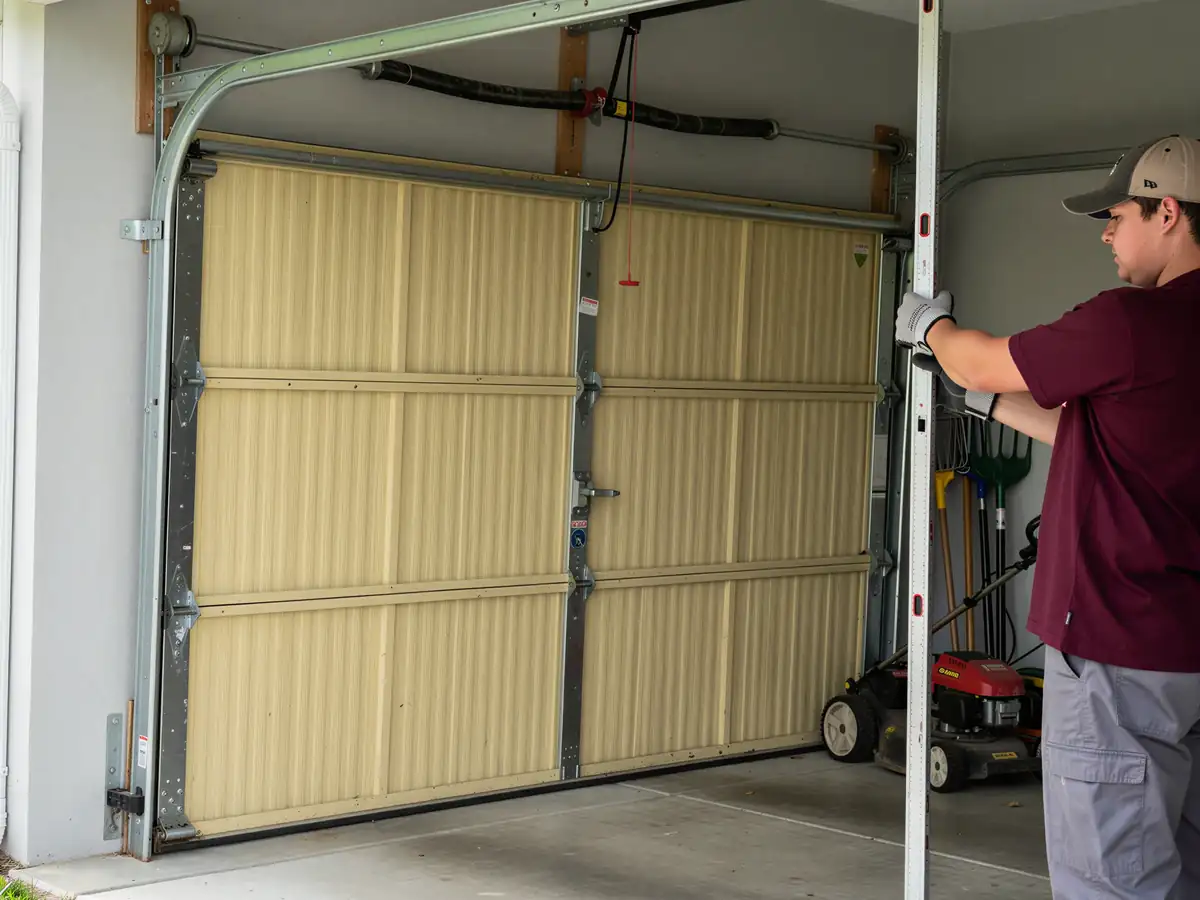
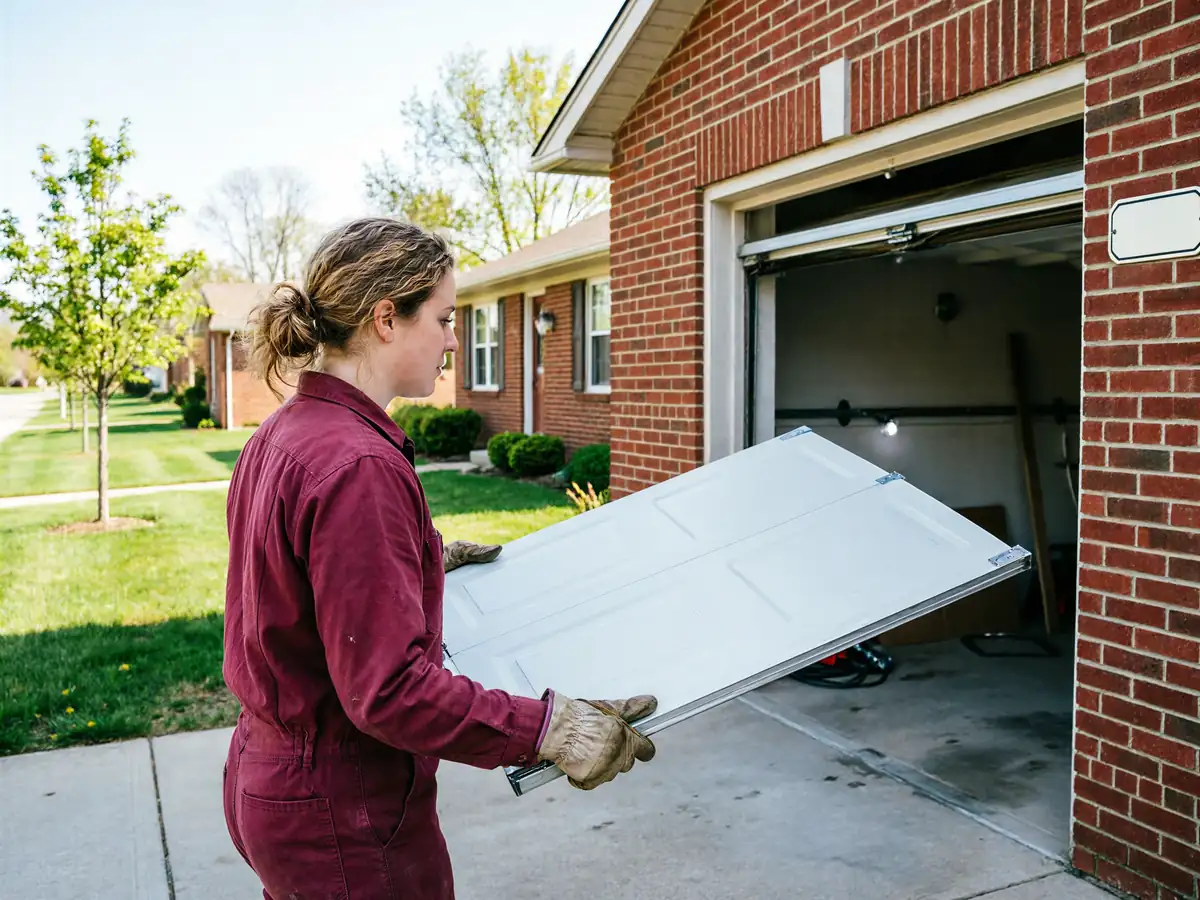
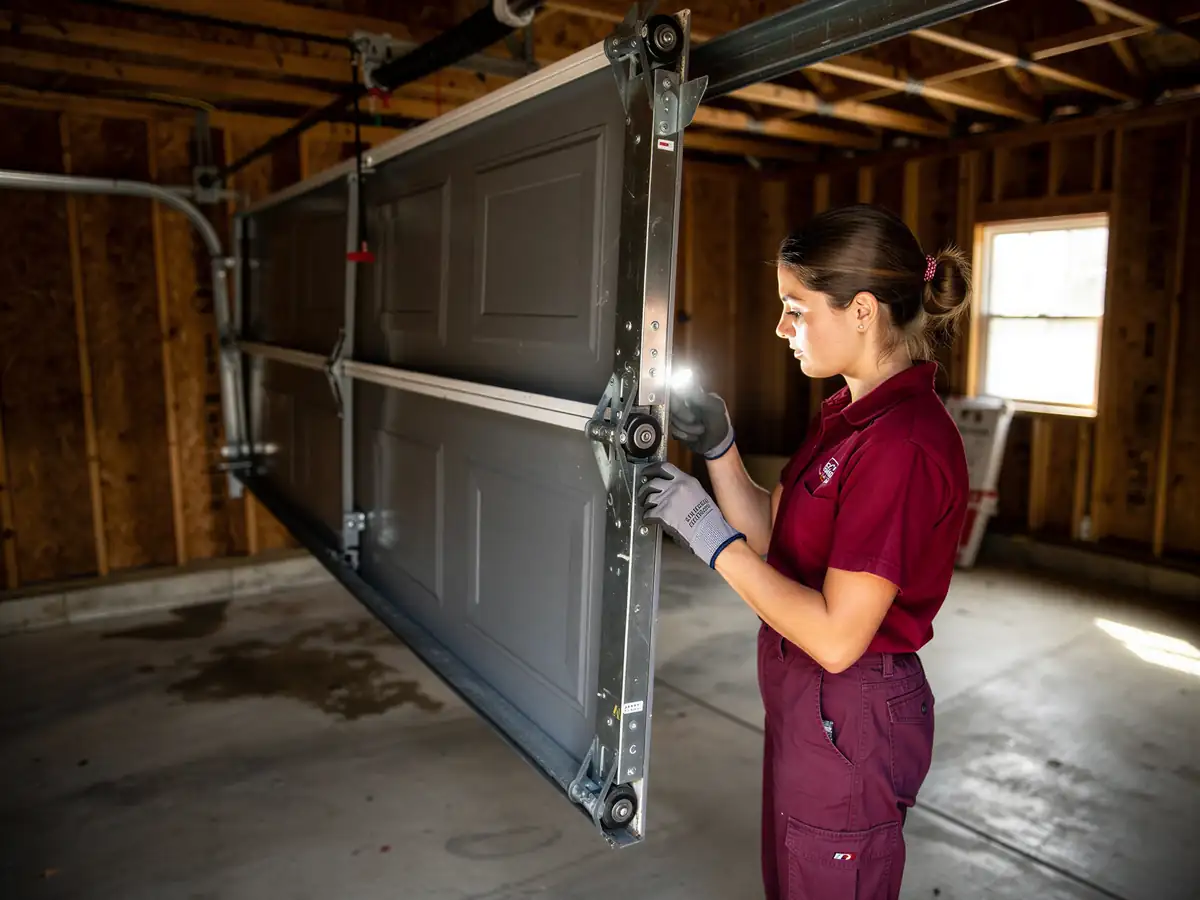
For a door of this era, the fix is usually mechanical, not cosmetic. We pull the damaged track section, check the vertical and horizontal brackets for square, and reset or replace rollers that have flat-spotted from running crooked. If the track pulled loose from the framing, we refasten it with hardware rated for the load rather than just driving the original screws back into the same holes. Andover's household income runs well above the service area's overall median, and in practice that shows up in which repair people choose: when a cable's frayed or a roller's worn out alongside the track damage, more owners here opt to replace the whole roller and cable set rather than patch just the broken piece, so the next cold snap doesn't bring the same call back. We'll always tell you which parts are actually failing versus which ones are just old, and let you decide how far to go. What we won't do is sell you a full track replacement when a bent two-foot section and a new bracket will hold up fine.