Can You Do This Yourself
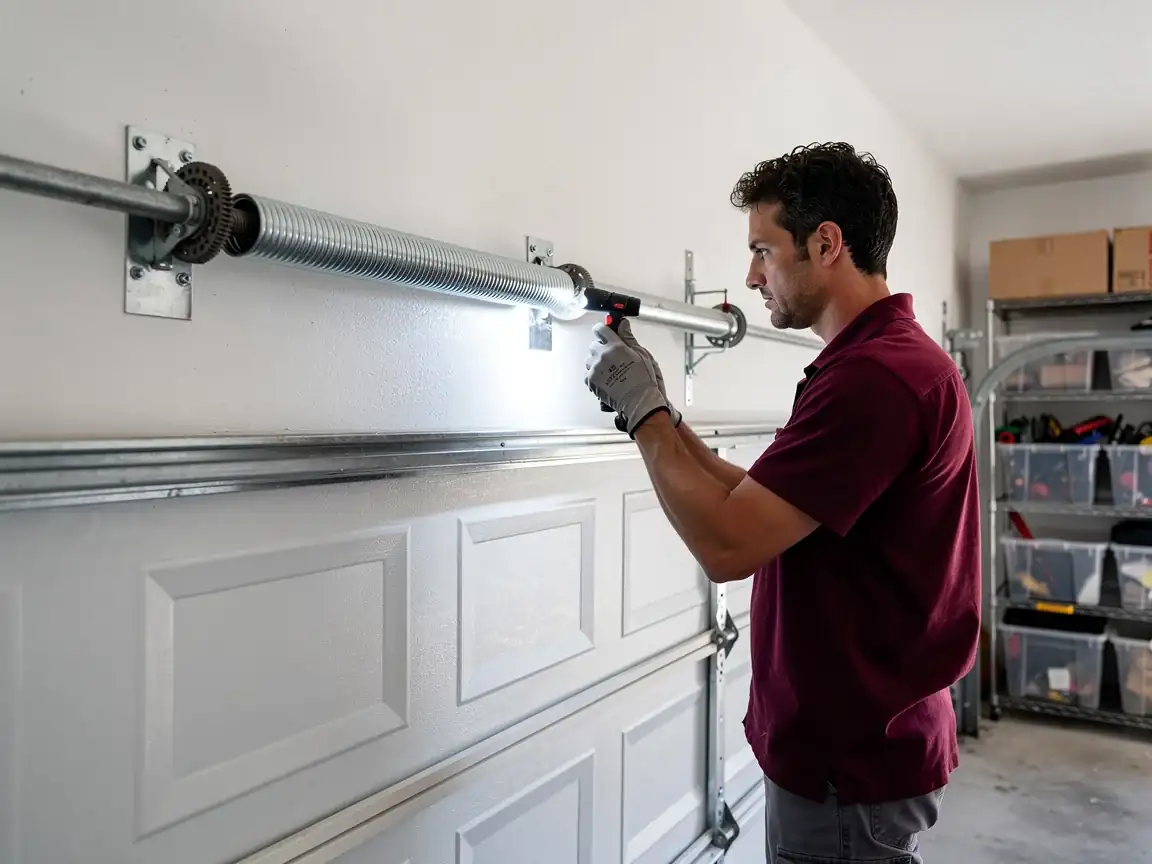
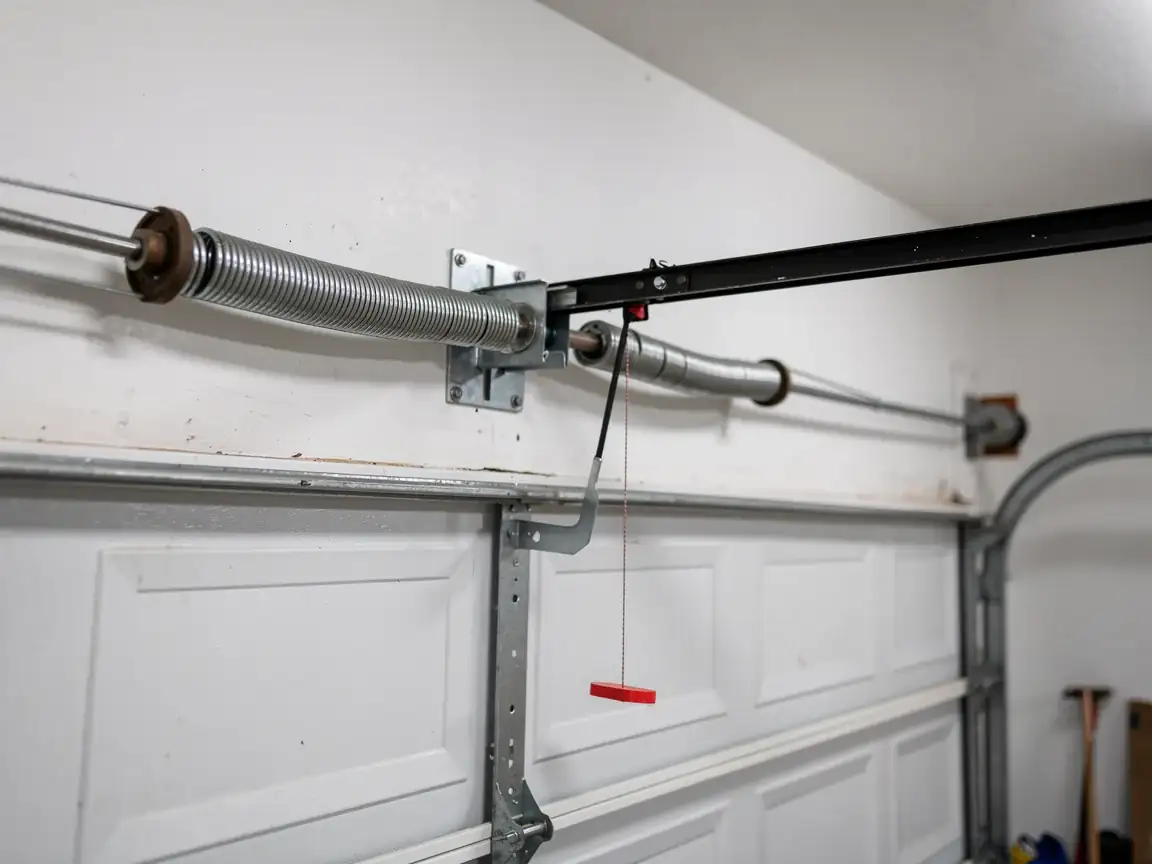
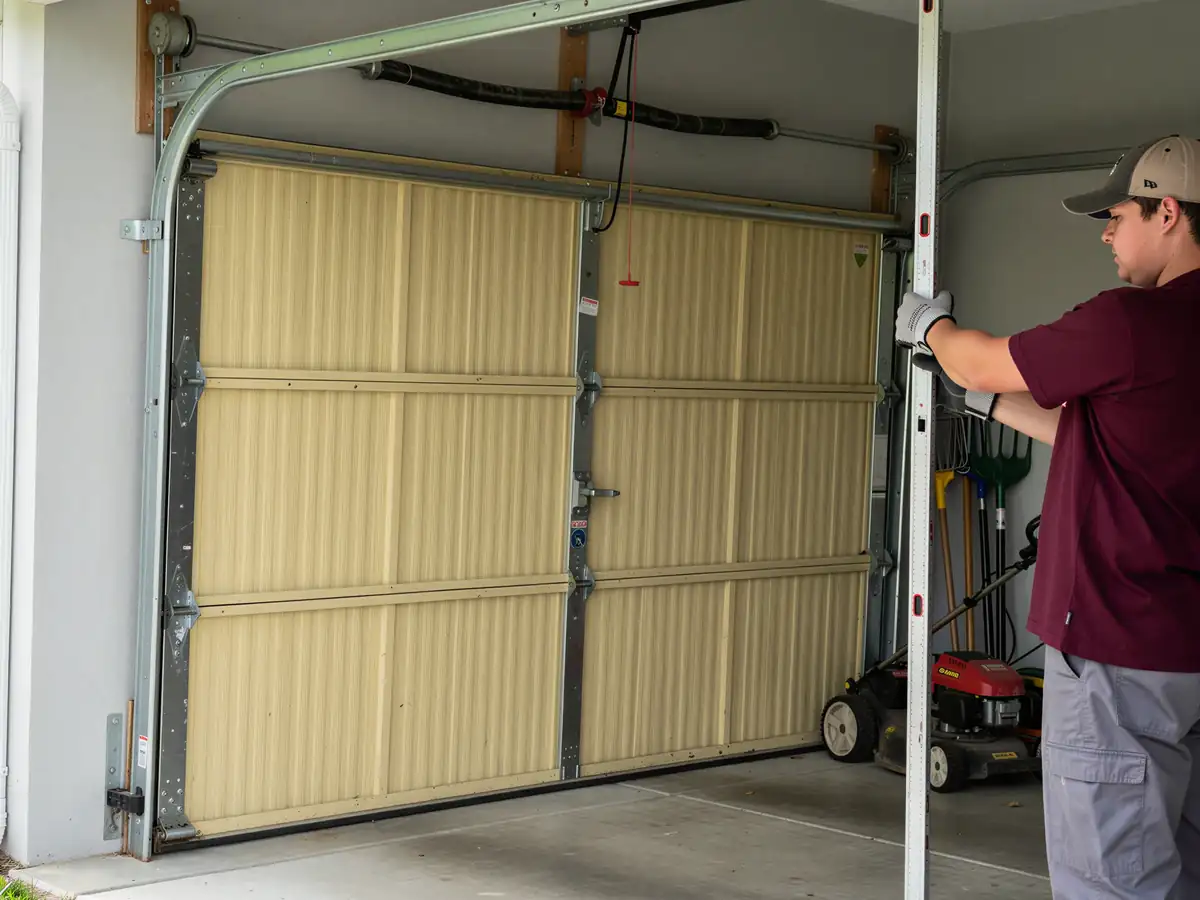
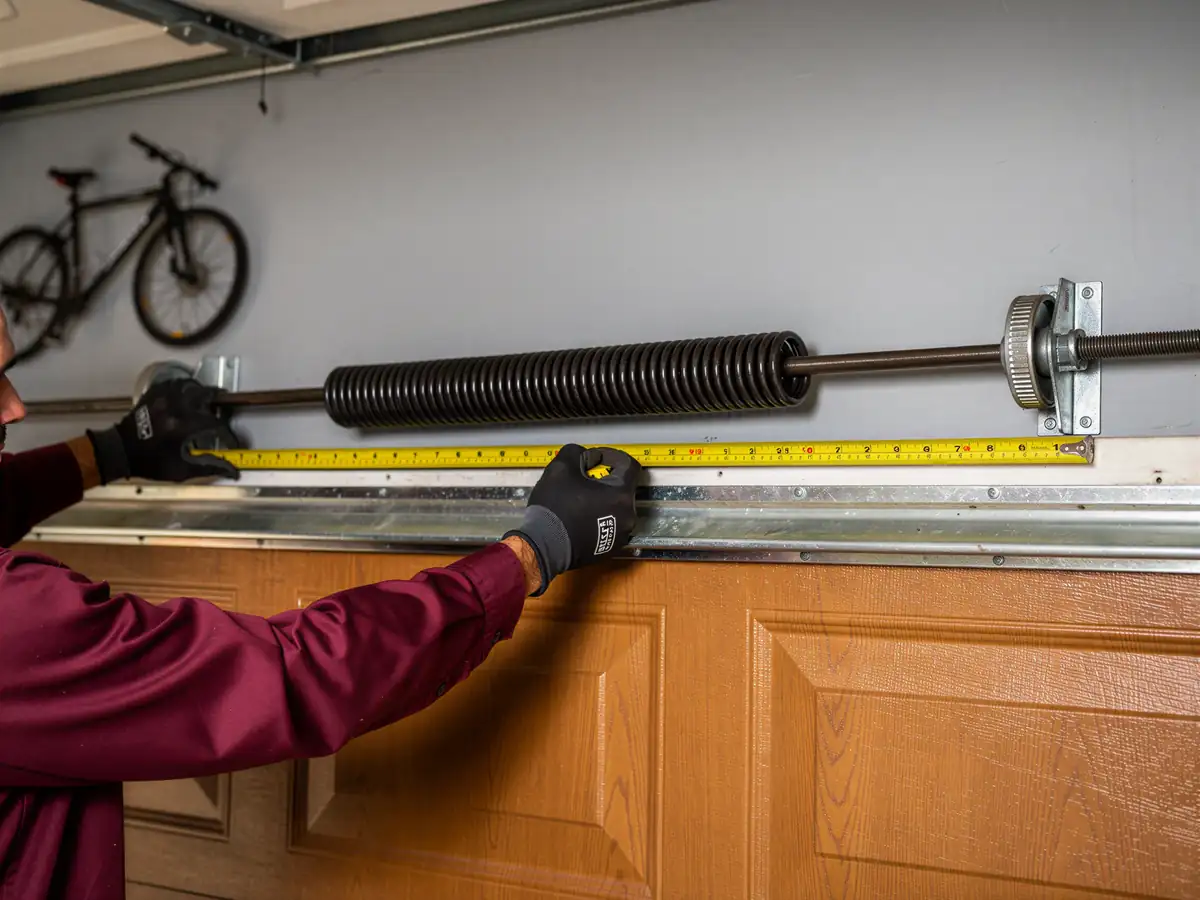
If a roller has popped out of the track but the door is still sitting level and the cables look intact, you can sometimes walk it back by hand with the opener disconnected. That's about where the safe DIY work ends. The moment a door is off track on one side only, or it's hanging crooked, there's a good chance a cable has slipped off a drum or a spring is carrying weight it shouldn't. Torsion springs store enough force to break a hand or worse, and a door that looks stable can drop the instant you touch the wrong bolt.
We'll be straight about this: if you can see the track pulled away from the wall bracket, or the bottom corner is dragging on the slab, stop trying to force it back into the channel. You risk bending the track further or warping a panel, and then a repair that would've cost a service call turns into a track and panel replacement. Our honest limit here is that we don't walk people through off-track fixes over the phone when cables or springs are involved - some of this needs hands on the door and a lift to do it without someone getting hurt. Checking that the track bolts are snug and the floor track is clear of debris is fair game for an owner. Pulling a loaded door back onto a bent rail is not.
How It Shows Up
The most common version
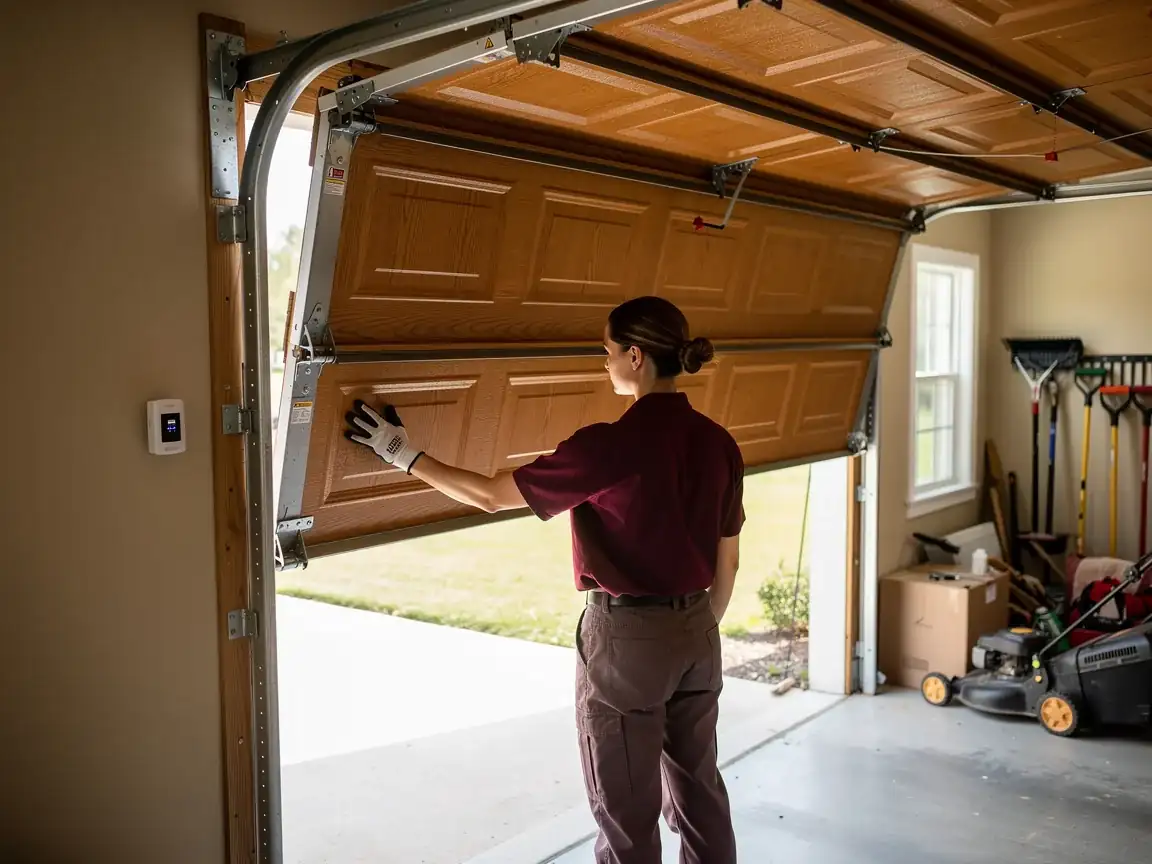
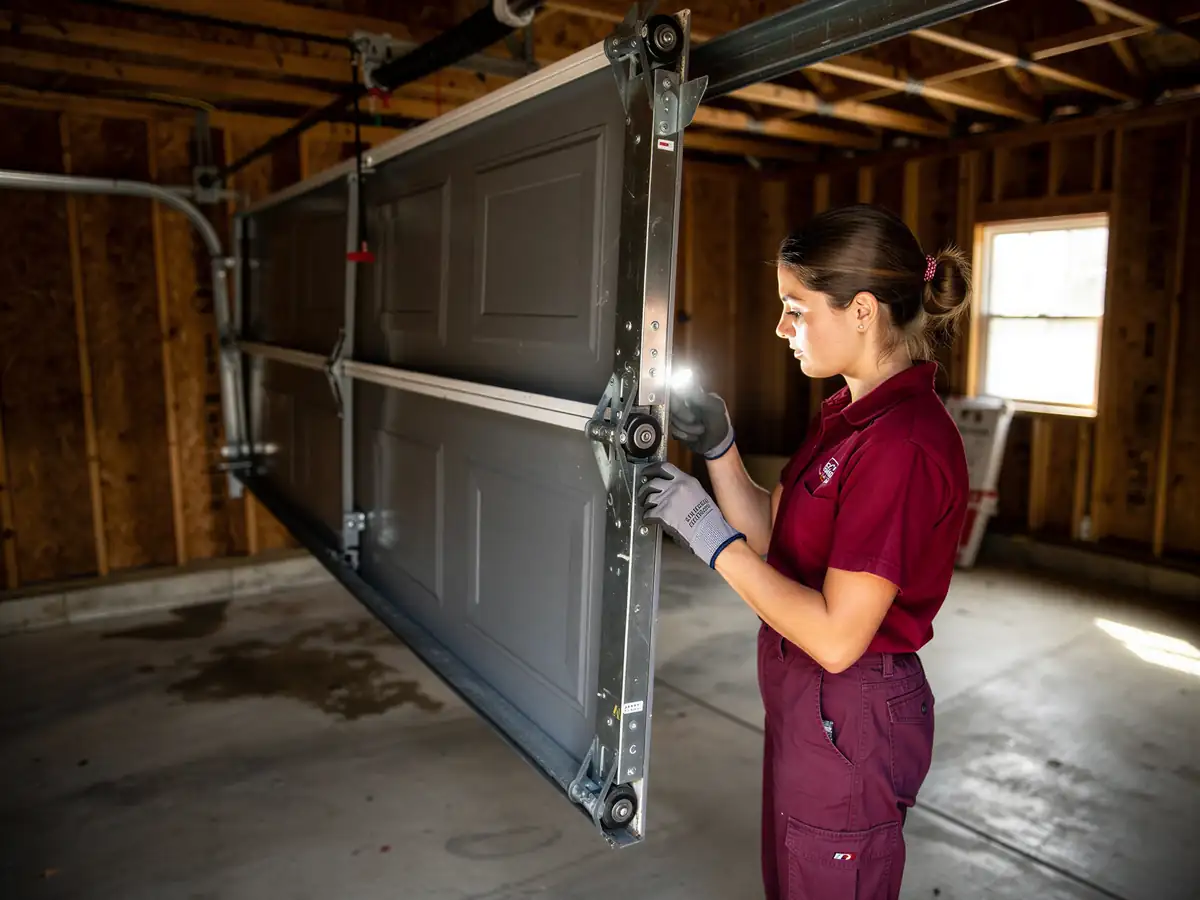
One bottom corner hangs lower than the other, and there's a visible gap of daylight under one side while the other side sits tight to the weatherstrip. The door usually still moves, which is what gets people to keep using it a few more days - that's the wrong move, since the track is taking load it was never built for.
A second version shows up as a grinding or popping sound right at the top of the travel
Where the roller rides past the curved section of track into the horizontal run. That curve is where brackets loosen first, and once a roller starts hopping the rail there instead of rolling through it, the door will walk itself further off line every cycle.
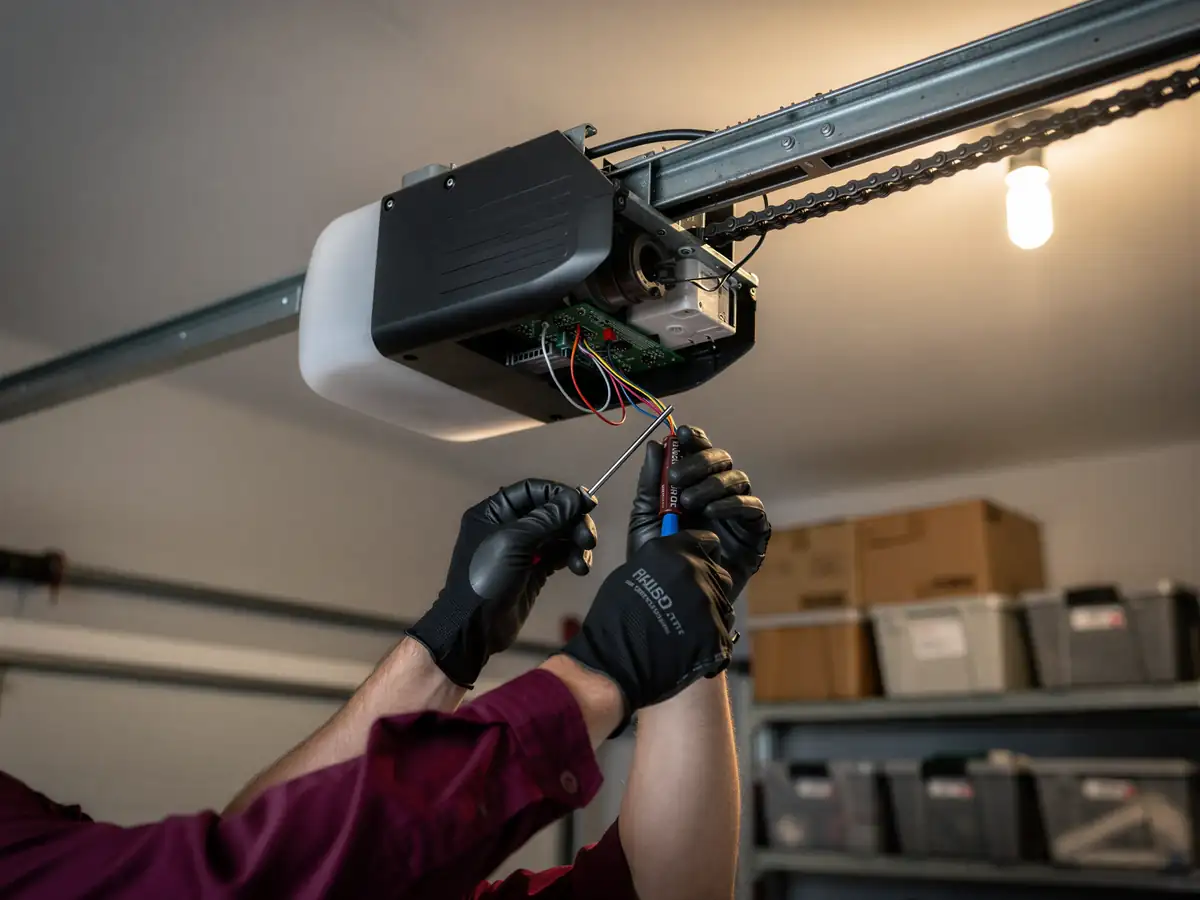
Less obvious: an opener that strains, reverses, or stalls a few inches into the cycle
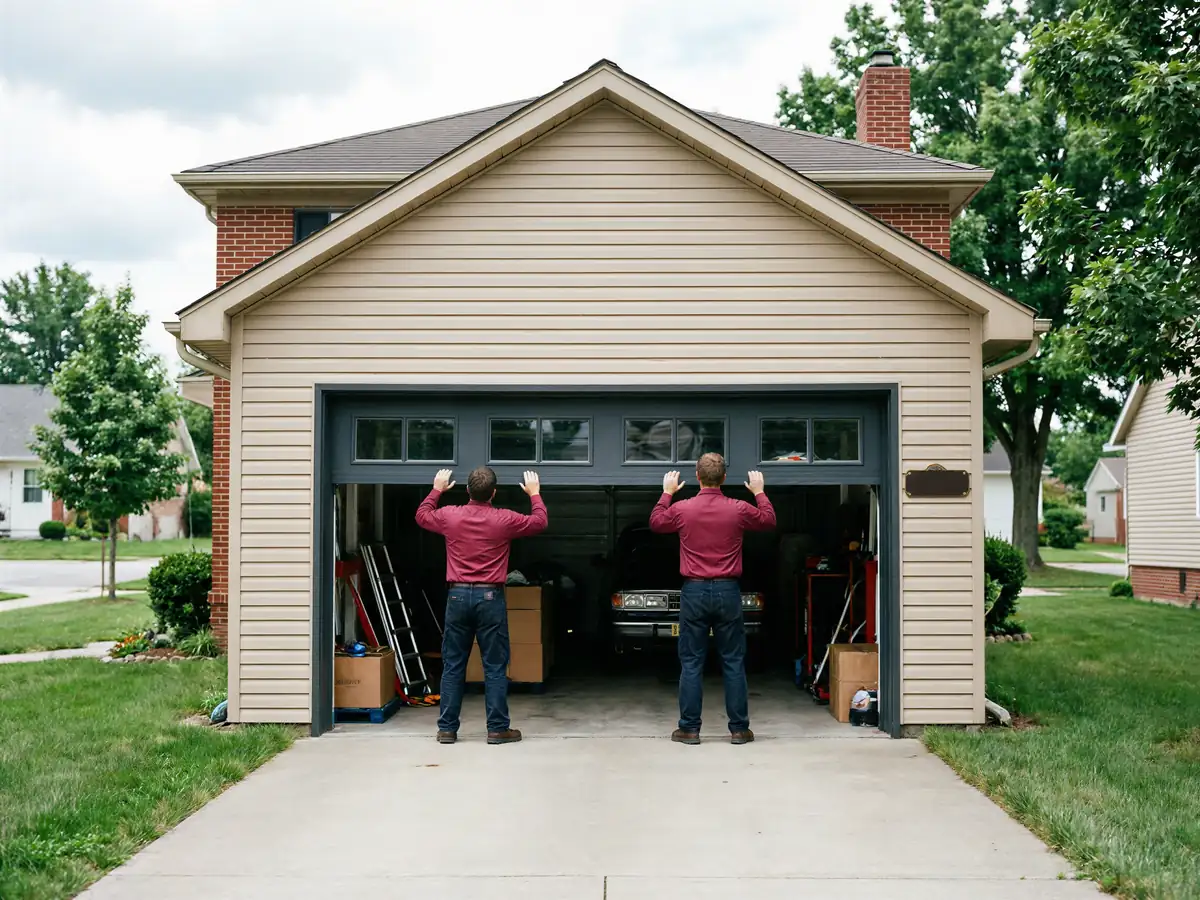
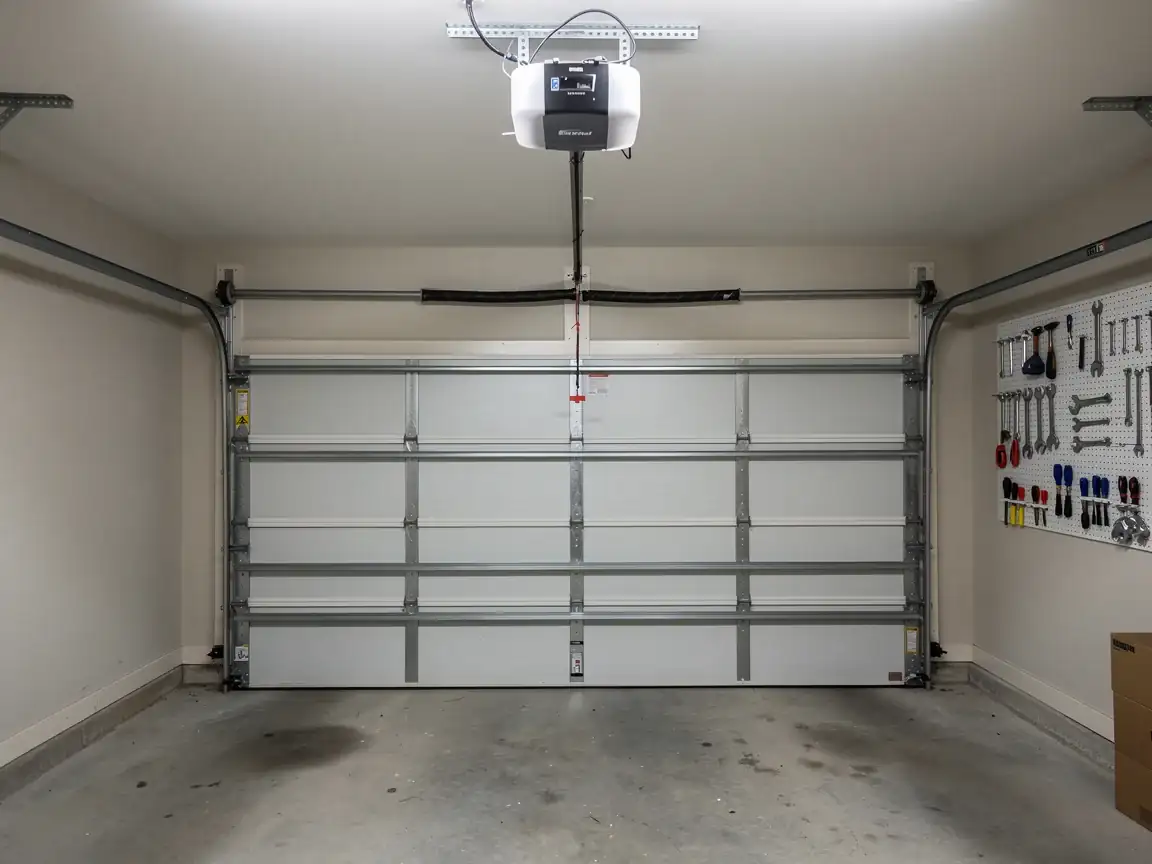
People assume that's a motor problem, but a door even slightly off its rail changes the resistance the opener feels, and the unit does exactly what it's built to do - stop before something breaks. If you've got a double-wide door, the off-track pattern tends to show up worse, since there's more panel weight twisting against the misaligned section.
What Can Go Wrong
Left alone, an off-track door usually gets worse on its own schedule, not yours. The panel nearest the bad roller takes the brunt of the twisting and can crack or buckle at the seam - once that happens you're replacing a section, not just realigning hardware. A track that's been pulled away from its wall bracket will keep working loose with every open-and-close cycle until the bracket pulls free of the framing entirely.
Cables are the bigger risk. A door riding off-track can let a cable slip off its drum, and a door with a slack or derailed cable can come down unevenly or drop outright if the opener releases it. That's not a sound a panel, it's a liability. We've also seen the opener's drive gear strip from repeated strain against a door that won't travel freely, which turns a track repair into a track-plus-opener repair.
The honest trade-off: a door that's been off track more than once, especially an older one, is sometimes past the point where realigning is the right call. If the track is bent rather than just loose, or the rollers are worn flat, straightening it back into position is a short-term fix. Replacing the track section costs less in the long run than repeated service calls on the same bent rail.
What Causes It Around Here
Housing stock across this service area was mostly built between 1957 and 2003, with the median landing around 1980, and the 1980s and 90s construction common to the 46 named communities we cover tends to carry the same builder-grade track hardware - steel rails on lag-bolted wall brackets, not the reinforced mounting you'd find on newer installs. Those brackets loosen with age, and a loose bracket is the single biggest reason a roller walks out of the channel.
Cold is the other half of it. This area sits in a severe cold climate band, and steel track contracts in hard cold enough to tighten the roller clearance right when the door gets used the most - early morning, before the garage has warmed up at all. A roller that rode fine in August can bind and pop loose in January on the exact same track, because the metal itself has changed shape slightly. Add a slammed-shut door, a worn roller, or a bracket that was never re-torqued since the house was built, and you've got the setup for a door jumping its rail.
We see this pattern repeat across the service area regardless of which town we're in that day, because the housing age and the winters don't change much from one named area to the next.