What Causes It Around Here
Circle Pines sits three miles from our Blaine shop, which is close enough that a call here doesn't eat the whole afternoon the way a run to the far edge of the service area does. That matters for opener work specifically, because half the job is diagnosis - watching the unit cycle, checking the logic board response, listening for the motor labor - before anyone touches a wrench. A short drive means more of the appointment goes to the actual repair.
The town's housing stock centers on 1982, right in the middle of the broader 1957-2003 range we see across the service area, and that median year matters for openers specifically. A house built in the early 1980s is now at the point where its second or third opener is due to fail, not its first - these homes have already been through one replacement cycle, and the units going in today were often mid-grade models from the 2000s that are now 15-20 years old themselves. With roughly 2,011 households in town, that's a lot of garages sitting right at that failure window at the same time.
Minnesota's cold climate plays a role too. Chain-drive openers working against a cold, stiff door put more draw on the motor and capacitor than the same unit would see in a mild climate, and that wear shows up as grinding, slow travel, or a motor that hums but doesn't move the door.
What Can Go Wrong
The most common call from this part of town is a dead opener that worked fine the day before
Usually a capacitor that's given out on a chain-drive unit, which is the default type installed in the 1990s and early 2000s when a lot of these garages got their first replacement after the original 1982-era builder-grade units wore out. Capacitors don't give warning; the motor just stops pulling.
After that, the next most common issue is a logic board that's lost its memory of the remotes and keypad
Usually after a power blip. The board itself is often fine - it just needs reprogramming - but on units old enough, the board has corroded contacts from humidity and won't hold a signal at all.
We also see worn drive gears on chain-drive openers from this era
The gear is nylon, it's meant to wear out, and on a unit original to a 1980s or 90s install, it usually has. The honest limitation here: if the opener itself is original equipment from that period, we'll tell you straight that replacement is often cheaper than hunting down obsolete parts, rather than billing you for a repair that won't hold.
What the Repair Takes
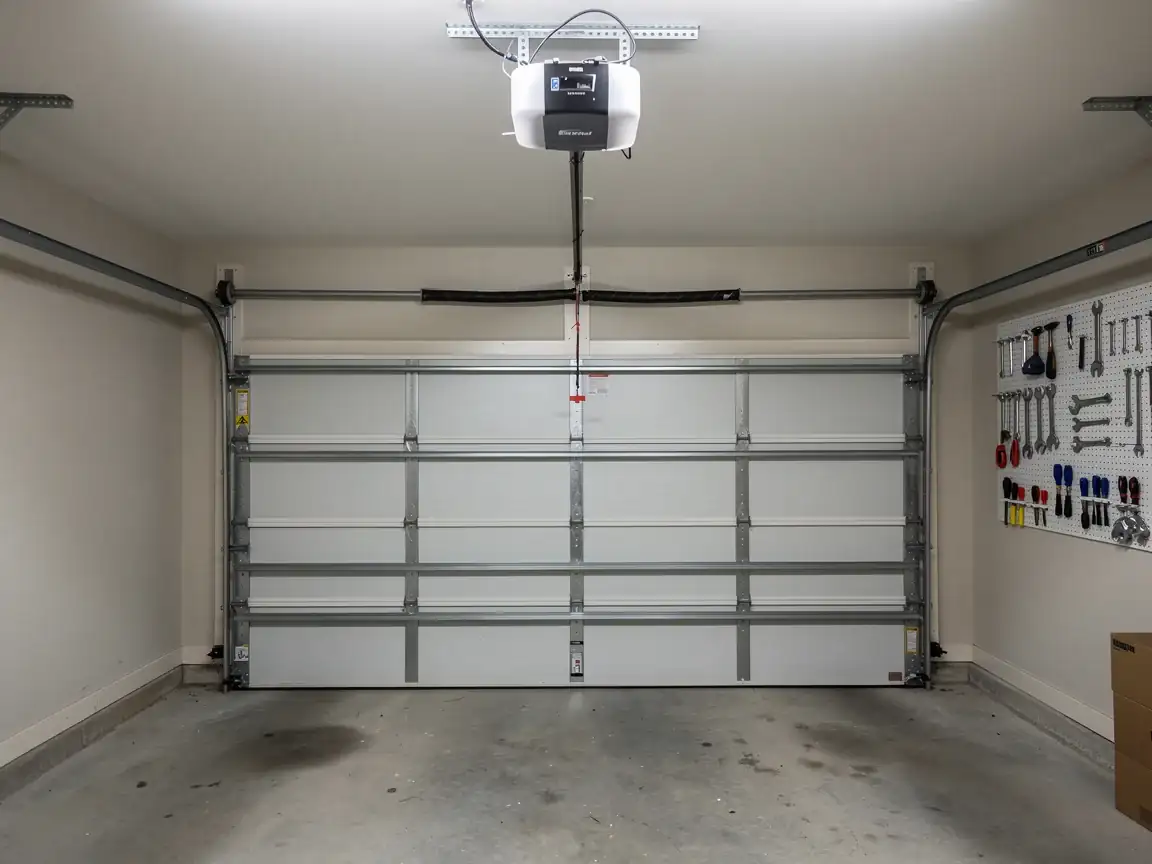
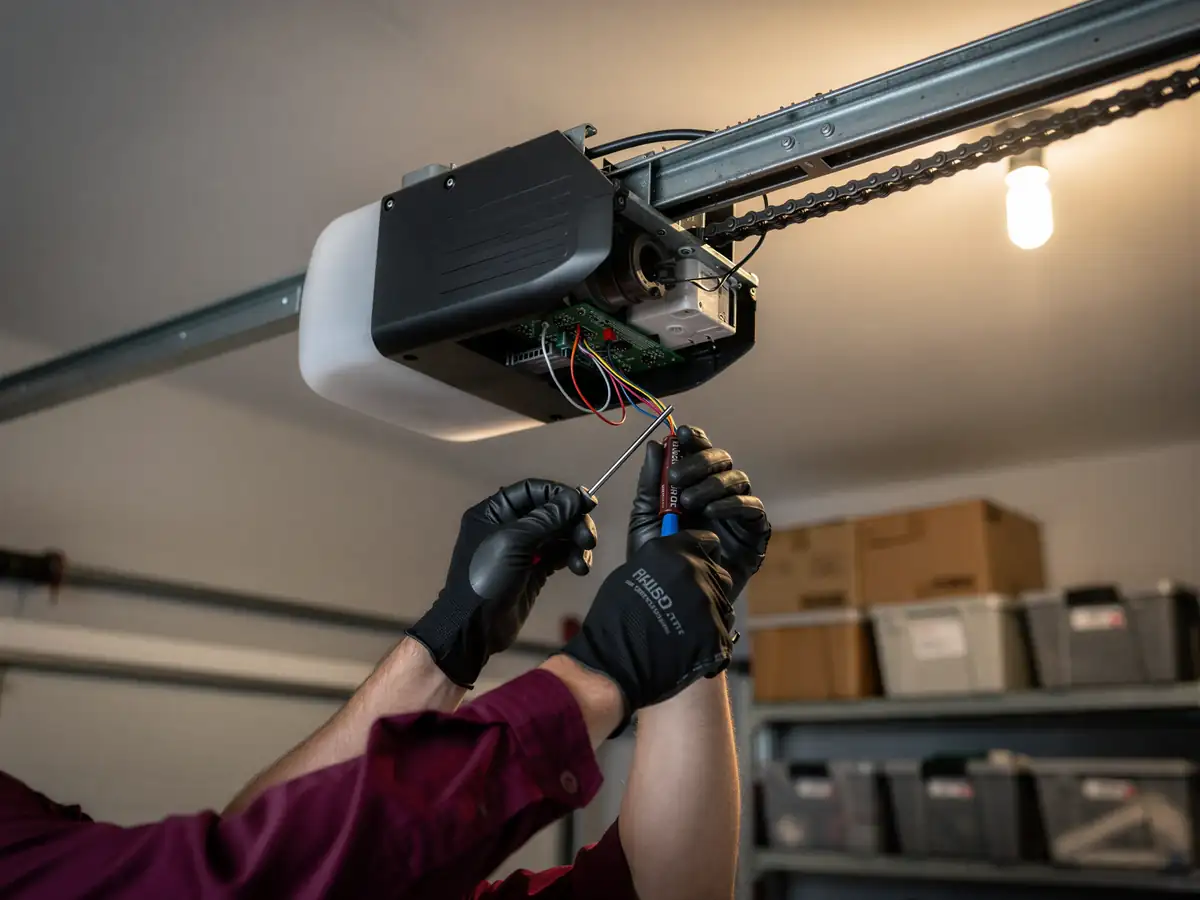
Most opener repairs are a single visit. We diagnose first - power at the outlet, travel limits, safety sensor alignment, then the motor and board - because a lot of what looks like a dead opener is actually a tripped safety sensor or a limit switch out of adjustment, both quick fixes with no parts needed.
When it is a failed part, capacitors and remotes are things we carry on the truck, so those get fixed the same visit. Logic boards and drive gears depend on the opener's age and brand; for a unit from the original 1980s building wave, the exact board may not be in production anymore, and we'll tell you that upfront rather than promise a part we can't source.
Given the 3-mile run from Blaine, there's no added travel charge built into scheduling a same-day look when the truck has room on the route that day.
What It Costs
We don't publish a flat number here because opener repair cost depends entirely on what's actually broken - a sensor realignment and a motor replacement are not the same job, and quoting one price for both would be dishonest. What we can tell you is that a capacitor or remote-related fix tends to run well under what a full opener replacement costs, while a board or motor failure on an older unit can tip the math toward replacement, especially once you factor in that a new opener also means current safety-sensor technology your old unit may lack. We'll give you the actual number on site, after we've looked at the unit, not before.