
Panel Replacement · Circle Pines
Panel Replacement for Circle Pines' 1980s Garage Doors
Circle Pines homes mostly date to the early 1980s, which means steel panel doors that crack in deep cold. We drive the 3 miles from Blaine to match and replace panels.
What Causes It Around Here
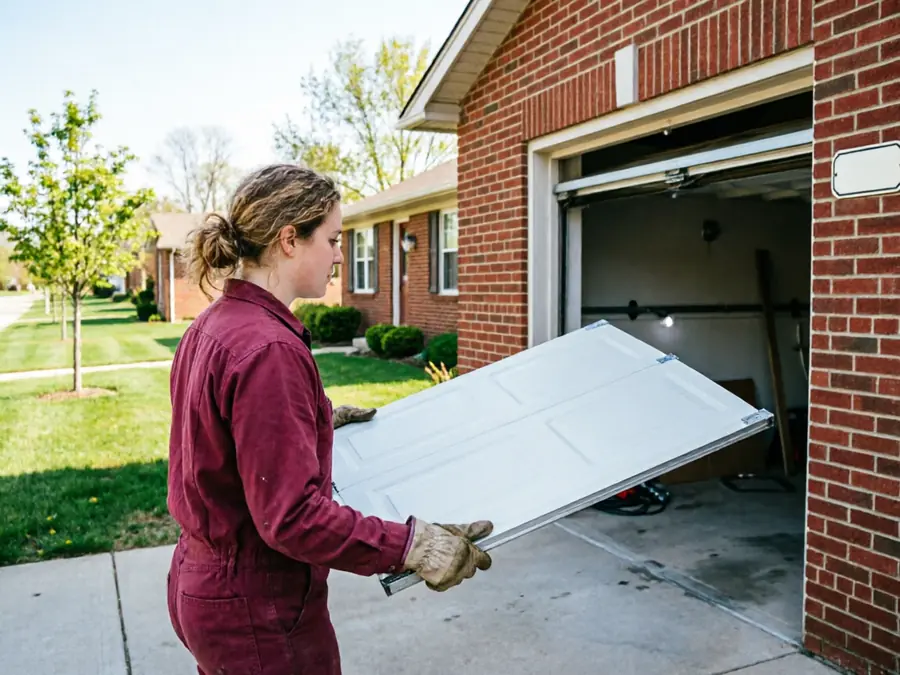
Circle Pines is a small town, about 2,011 households, and that matters for how we plan a panel job: there's no big-box subdivision here with one builder's doors repeated a thousand times, so a lot of what we find is one-off or small-run steel sections put in when the house itself went up. Most of that housing dates to around 1982, which puts the original doors squarely in the first generation of mass-produced steel garage doors - thinner gauge steel, often a single layer with no insulation backing, popular because they were cheap and held paint fine in a showroom. They don't hold up the same way after forty-plus winters. This area sits in a severe cold climate band, and steel contracts hard when temperatures swing below zero. A panel that's already thin from decades of expansion and contraction will crack at a seam or around a hinge bolt before a newer insulated panel would. We see this more here than in neighborhoods built in the 1990s or later, where doors tend to have heavier gauge steel and a foam core that resists that kind of cold-stress cracking.
What Can Go Wrong
On a door this age, one bad panel rarely stays a one-panel problem. The steel on 1980s-era doors is thinner, so once a section is dented or cracked, the whole door loses rigidity - torsion springs and cables that were sized for a stiffer original panel now work a door that flexes more, which speeds up wear on rollers and hinges. Cold makes it worse. A hairline crack that's cosmetic in July can widen into a through-crack by February once the steel has gone through a few deep freeze-thaw cycles. We also run into mismatched hardware: a previous owner or handyman repair bolted on a panel from a different era or brand, and the hinge spacing doesn't quite line up, which puts uneven stress on the track. None of this is dramatic until the door won't seal at the bottom anymore and the garage stops holding heat, which in a severe cold climate is a real cost, not just an inconvenience.
What the Repair Takes
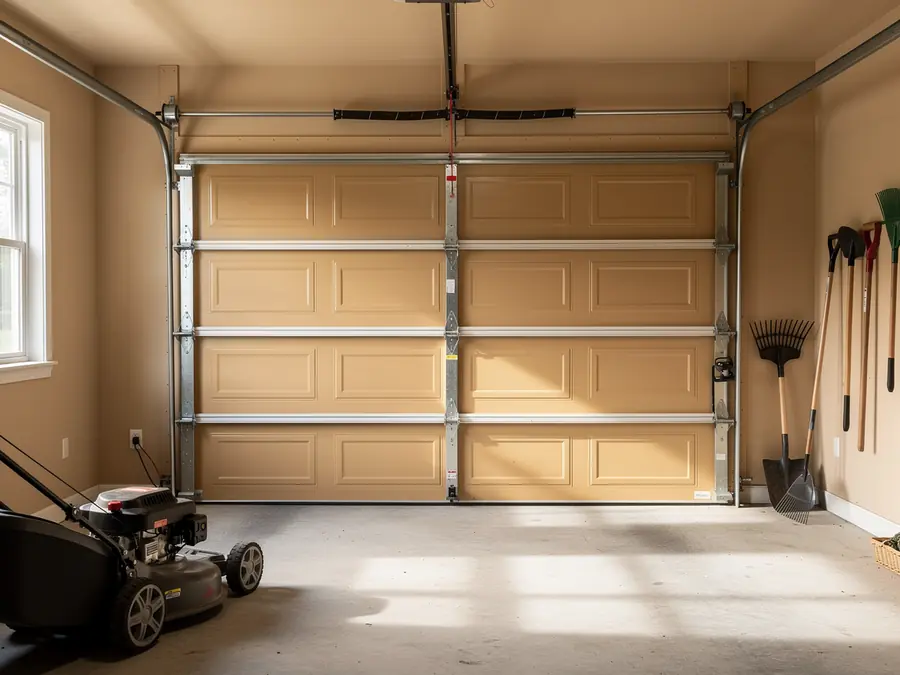
The honest answer: it depends on whether we can still get a matching panel. Doors built around the early 1980s are long out of production, and exact-match sections for that era aren't something we keep on the truck - they usually have to be special-ordered, and that can add lead time to the job. When a close match exists, we pull the damaged section, check the hinges and rollers on either side of it for wear from the old steel's flex, and set the new panel so it seats evenly in the track before we touch the springs. If no match exists, or the door's basic design has been discontinued outright, replacing the whole door is usually the more honest recommendation than forcing a mismatched panel onto a 40-year-old frame. We'll tell you straight which situation you're in before we quote anything, because guessing wrong here means a second trip.
What It Costs
We don't post a flat number for panel work because the two variables that drive the price - whether a matching panel is available and how much the surrounding hardware needs attention - aren't the same from one Circle Pines house to the next. A single steel section replacement on a door where parts are still sourceable costs less than a job where we're also swapping hinges, rollers, or recommending a full door because the panel profile is gone. Median household income in this part of our service area runs close to $96,000, and we quote with that in mind - we'd rather tell you a single-panel fix isn't worth it on a door that's failing elsewhere than sell you a patch that doesn't last the next cold snap. Ask for a number on-site; we'll give you the real one, not a range meant to get a call booked.
FAQ
Questions about this
Can you match the panel on a door from the early 1980s?
Sometimes. A lot of Circle Pines homes have doors from that era, and exact matches aren't something we stock - we have to source them, which can take longer than a same-week repair. If we can't find a match, we'll tell you and talk through whether a full door makes more sense than a mismatched panel.
Why does my panel keep cracking in winter?
Steel panels from the early 1980s are thinner gauge and usually have no foam core. In a severe cold climate like this one, that steel contracts hard in deep freezes, and a section that's already stressed from decades of use will crack at a seam or hinge point before a newer insulated panel would.
Do you have a shop in Circle Pines?
No, we run out of Blaine, about 3 miles away. We come to you for the job itself; there's no local branch or counter to visit.
Is it cheaper to replace one panel or the whole door?
It depends on parts availability. If your door's panel profile is still sourceable, one section is usually less than a full door. If the design is discontinued, which is common on 1980s-era doors, a full replacement can end up being the more sensible cost once you factor in future mismatched repairs.
Tell us what your door is doing.
We serve Blaine, MN and nearby communities. Every job starts with a diagnosis, so you know what failed before any work begins.