
Maintenance · Circle Pines
Garage Door Maintenance for Circle Pines Homes
Circle Pines homes mostly date to 1982, right at the edge of the extension-spring era. Here's what that means for maintenance and what a tune-up actually covers.
What Causes It Around Here
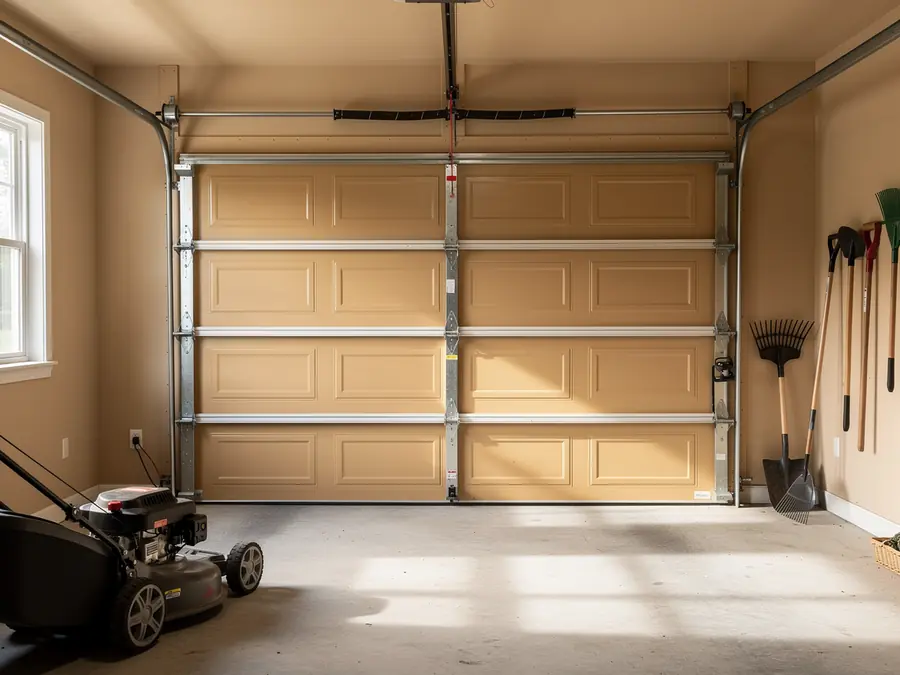
Most garage doors in Circle Pines went up around 1982, which puts them at an odd point in hardware history. Builders in this stretch of the metro were finishing the move from extension springs mounted above the horizontal track to torsion springs on a shaft over the header, so you'll find both setups depending on when the house was framed and whether the door's been swapped since. Either way, these are steel sectional doors, usually two-car width, hung on roll-formed track that was never built to be adjusted more than once or twice in its life.
At 2,011 households, Circle Pines is a tight pocket of mostly single-family driveways, and a lot of those doors are still running their original rollers and hinges forty-plus years in. Steel holds up fine. What doesn't hold up is the lubricant, the cable strands at the drum, and the galvanized coating on hardware that's been through forty-some Minnesota winters. Cold doesn't cause a fault by itself, but it speeds up everything that's already worn - stiff grease fights the spring, a frayed cable finally lets go, a roller with a flat spot starts binding in the track once the temperature drops and the steel contracts.
What Can Go Wrong
On a door this age, the common failure is a torsion or extension spring that's reached the end of its cycle count and lets go without much warning - usually in the coldest part of the year, when hardened steel is least forgiving. Cables at the bottom bracket fray from the inside first, so they look fine until one strand snaps and the rest follow under load.
Nylon rollers from this era turn brittle and crack rather than wearing down smoothly, which throws the door out of track alignment a little at a time. You'll notice it as a grinding sound or a door that jerks instead of gliding. Track brackets that were torqued once in 1982 and never touched since tend to work loose from decades of thermal expansion and contraction, especially on the north-facing side of a garage. None of this is unusual for a door built when yours was - it's just what forty years of Minnesota weather does to steel and nylon.
What the Repair Takes
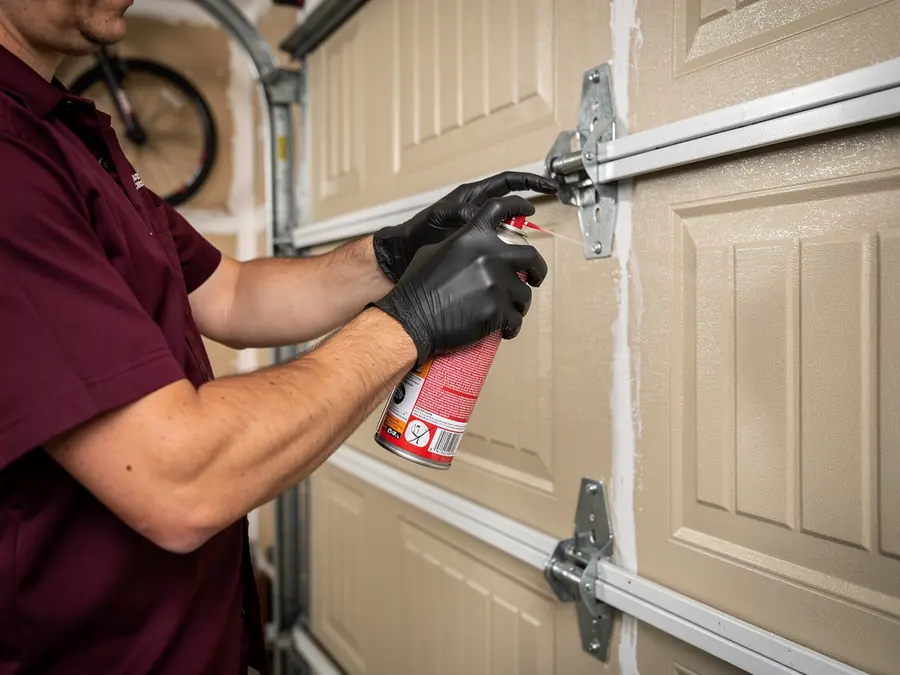
A maintenance visit means lubricating the springs, hinges, and rollers with the right grease for cold climates, tightening every bracket and bolt on the track and header, checking cable wear at the drums, and testing spring balance by hand rather than trusting the opener's force setting. We also check the auto-reverse and photo-eye sensors, since a door this age may have had the opener replaced more recently than the door itself.
Here's the honest limit: if a spring is already showing rust pitting or a cable has a broken strand, that's not a maintenance fix - it's a repair call, and we'll tell you that on the spot rather than patch it and have it fail in January. We also don't stock every roller or hinge style from 1982; some of the older galvanized hardware takes an extra day to source. A maintenance visit catches most of this before it becomes an emergency, but it can't rebuild hardware that's already failed.
What It Costs
We don't post a flat price here because the cost depends on what the door needs beyond a basic tune-up - whether hardware needs replacing, how many sensors or seals are involved, and whether the opener needs attention too. With a median household income of $96,477 in Circle Pines, most owners here choose a scheduled maintenance visit over waiting for a dead spring to force an emergency call, since a controlled visit costs less than a snapped cable on a Saturday night.
Circle Pines sits three miles from our Blaine shop, close enough that a maintenance stop here doesn't turn into a half-day trip or add a long drive charge to the job. Ask for a quote based on your door's age and what we find during the visit - we'd rather give you a real number after a look than a guess over the phone.
FAQ
Questions about this
How often should a door from the early 1980s get serviced?
Once a year is the baseline for a door this age, ideally before the first hard freeze. Cold makes stiff grease and worn hardware fail faster, so a fall visit catches issues while they're still a tune-up and not a repair call.
Will you replace my springs during a maintenance visit?
Not usually. A maintenance visit checks balance and wear but doesn't swap parts that are still sound. If a spring shows rust pitting or the cable has a frayed strand, we'll flag it as a separate repair rather than patch it into the tune-up.
Does the original 1982 hardware still work fine?
Often, yes - steel track and brackets hold up well if they've been lubricated and kept tight. The parts that usually fail first are rollers, cables, and springs, not the frame itself, so a tune-up can extend the life of hardware that's older than the house's current owner.
Tell us what your door is doing.
We serve Blaine, MN and nearby communities. Every job starts with a diagnosis, so you know what failed before any work begins.