
Garage Door Repair · Circle Pines
Garage Door Repair for Circle Pines Homes
Circle Pines homes mostly date to 1982, a few years newer than the Blaine average. That shift changes which springs and openers fail first. We drive the 3 miles from Blaine for the fix.
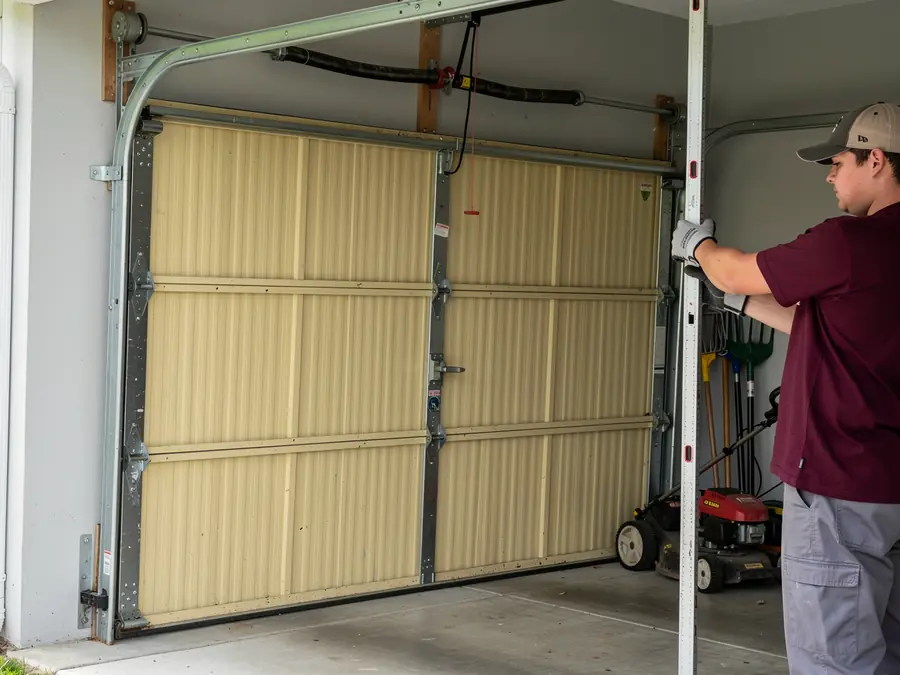
What Causes It Around Here
Circle Pines sits about 3 miles from our Blaine shop, and the housing stock here skews a touch newer than the service area median. Most Circle Pines garages went up around 1982, inside the broader 1957-2003 build window we see across the 46 communities we cover, but closer to the later end of that range than some neighboring towns. That matters for the repair call: a 1982 door is usually on a torsion spring system rather than the older extension-spring setups you find in houses built before 1970, and the opener, if it's original, is a chain-drive unit that's been through four decades of Minnesota winters.
The cold is the bigger factor long-term. This region sits in a severe cold climate band, and repeated freeze-thaw cycles stiffen the lubricant in springs and rollers, shrink weatherstripping until it pulls away from the slab, and make steel cables more likely to fray at the drum. A door that closes fine in September can bind or drop unevenly by January. None of that is unique to one house - it's what forty-plus winters do to hardware that was built to a 1980s standard, not a current one.
What Can Go Wrong
On a 1982-era door, the torsion spring is the part most likely to fail outright, usually without warning - it just snaps, often on the first hard cold snap. If the spring is original to the house, the steel has had four decades of cycling and the wire gauge used back then wasn't rated for today's heavier insulated panels if the door's been swapped out since.
Track misalignment is the other common call. Slab settling over 40+ years shifts the track brackets just enough that rollers start binding, especially on the side that gets more sun and freeze-thaw movement. Openers from that era, if not already replaced, tend to fail at the drive gear or the circuit board rather than the motor itself - a $20 part that's often more expensive to source than to replace the whole unit.
Cables fraying at the bottom bracket show up more in houses that never had the original hardware serviced. It's not dramatic until it is: a frayed cable under tension can let a panel drop fast.
What the Repair Takes
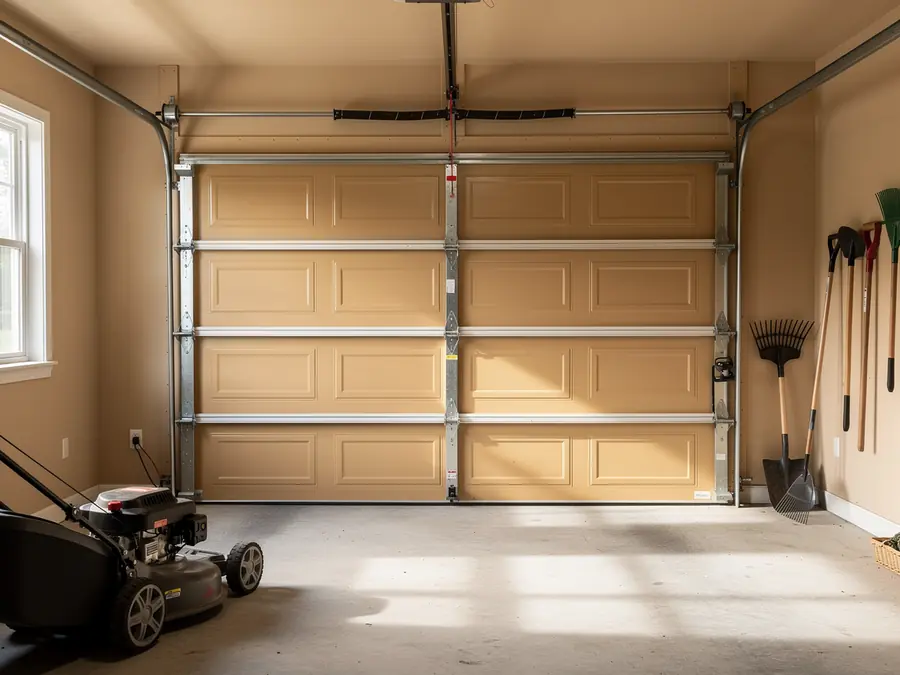
A straightforward torsion spring swap on a standard double door takes about the time you'd expect for careful work: remove the old spring under full tension control, measure the door weight, wind in a matched replacement, and test the balance by hand before trusting the opener to it. Track realignment is usually faster unless the bracket itself has pulled from the jamb, which on an older slab sometimes means re-anchoring rather than just a shim.
We carry common torsion spring sizes and standard track hardware on the truck, since those cover most of what we see in houses built in this era. What we don't always have on hand is a legacy opener logic board for a specific 1980s model - those sometimes need to be ordered, and if the part's discontinued, replacing the opener outright is usually the better call than chasing parts for a unit that's already lived a long life.
We're honest when a repair isn't worth it: if the door itself is original and the panels are rusted through or badly dented, a new torsion spring on a dying door just delays the real job.
What It Costs
We don't publish flat prices here because spring size, door weight, and whether the opener needs touching all change the number, and quoting blind for a 1982 door versus a newer one would be guessing. What we can tell you: Circle Pines' median household income runs close to $96,477, a bit under the wider service area's $100,179, and most of the repair calls we get here are straightforward spring or track jobs rather than full door replacements, since the housing stock is old enough to need spring work but not so old it needs structural rebuilding.
The honest limitation: we travel from Blaine for every call here, about 3 miles each way, so we don't carry a local parts cache the way a shop based in town might. For common parts that's a non-issue. For an obscure or discontinued opener part, it can add a day while we source it. We'll tell you upfront if that's the situation rather than let you wait and wonder.
FAQ
Questions about this
Does the age of my garage door matter for the repair cost?
Yes. A door built around 1982, which is typical for Circle Pines, is usually on torsion spring hardware we stock standard sizes for. If the opener is original to the house, sourcing a specific legacy part can take longer and change the timeline, though the spring or track work itself is usually routine.
How far is Circle Pines from your shop in Blaine?
About 3 miles. We come to you for the repair - there's no local branch in Circle Pines, just the drive over from Blaine, which is short enough that it doesn't add meaningfully to scheduling.
Why does cold weather cause more garage door problems here?
This area sits in a severe cold climate band. Repeated freeze-thaw cycles stiffen spring lubricant, shrink weatherstripping, and make cables more prone to fraying at the drum, so winter is when most spring failures and track binding show up.
Is it ever not worth repairing an old door?
If the door itself, not just the spring or opener, is original and the panels are rusted or badly dented, putting a new spring on it just delays a replacement that's coming anyway. We'll say so rather than sell a repair that doesn't make sense.
Tell us what your door is doing.
We serve Blaine, MN and nearby communities. Every job starts with a diagnosis, so you know what failed before any work begins.