
Garage Door Repair · Blaine, MN
Garage Door Repair for Blaine Homes
Blaine's 1980s-90s housing and severe winters often strain torsion springs and openers. Blaine Garage Door Pros repairs springs, cables, and openers fast.
Can You Do This Yourself
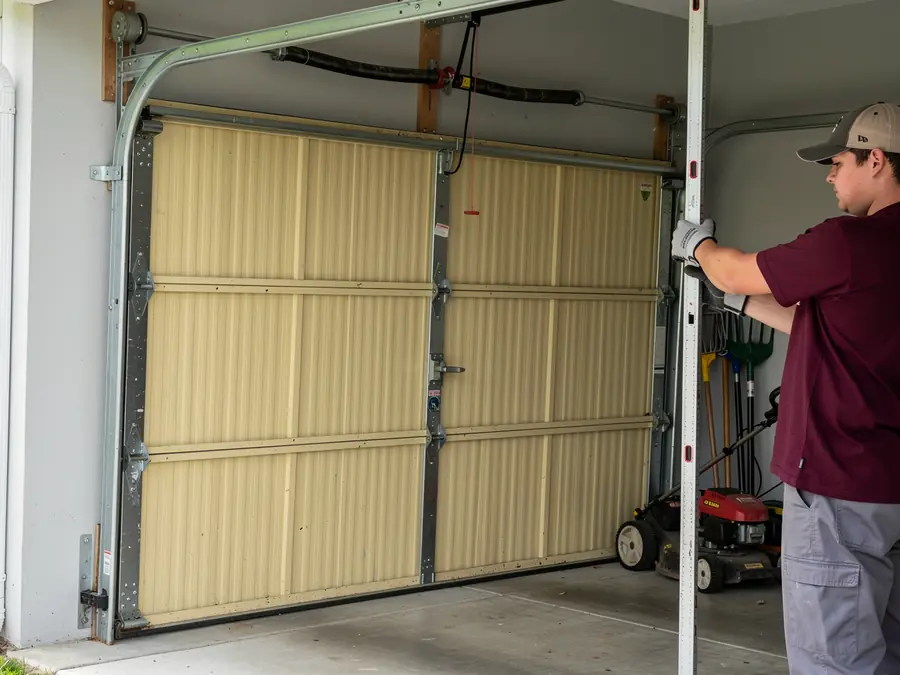
A torsion spring holds close to 150 pounds of wind-up tension, and that doesn't change whether the house is in Blaine or anywhere else. If a spring lets go while you're unwinding it, it can take a finger or worse. That one's not a DIY job, full stop. There are things you can safely do yourself: keep the tracks clean, lubricate the rollers twice a year, check that the photo-eye sensors aren't knocked out of alignment, and tighten the lag screws on the header bracket if the door's been sagging at the top. None of that fixes a cracked spring or a cable that's jumped the drum, though.
Honest limitation: we don't stock every opener logic board on the truck. If your opener is an older model with a control board that's been discontinued, we may need to order the part, and that can mean a day or two of waiting instead of a same-visit fix. We'll tell you up front if that's the situation rather than promise something we can't deliver that day.
How It Shows Up
Most calls start the same way: the door groans, hesitates, or bangs loudly partway through a cycle, especially on the first cold morning after a stretch of mild weather. Grease that was fine at 40 degrees turns stiff at 10 below, and a spring or hinge that was already fatigued from age finally gives under the added resistance. In a lot of Blaine homes, that resistance is coming from hardware that's been cycling since the house was built - a big share of the local stock went up in the 1980s and 90s, and original torsion springs are rated for a set number of cycles, not a set number of years.
Other signs: the door opens a few inches then reverses, one side drops faster than the other, or the opener motor runs but the door doesn't move at all. That last one is almost always a broken spring or a disconnected trolley, not the opener itself. If you're hearing a loud pop followed by the door refusing to budge, that's a spring letting go - call before you try the emergency release cord, since the door can drop fast once the spring's gone.
What Can Go Wrong
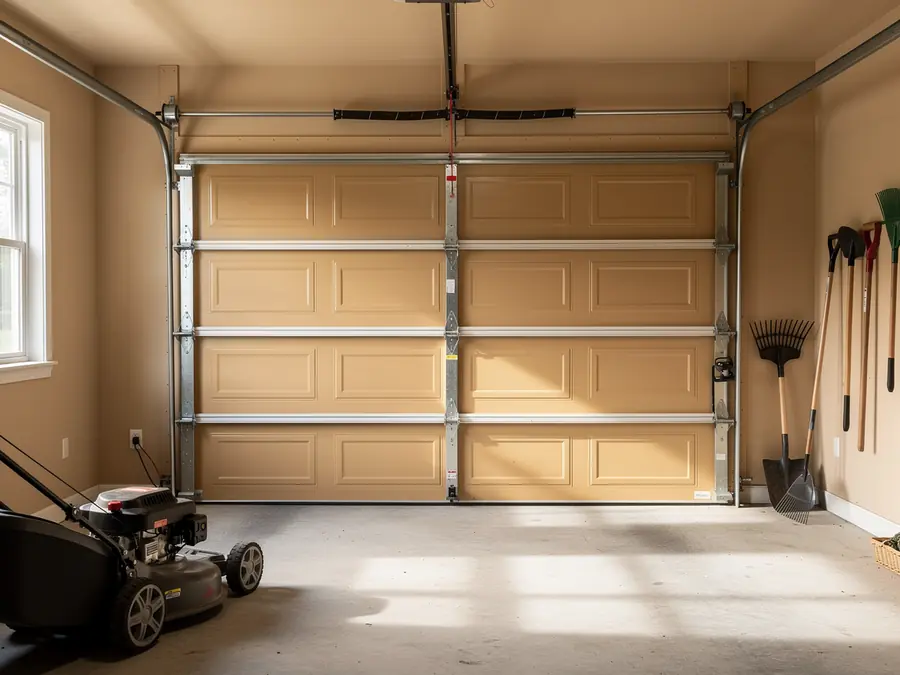
The most common failure on these doors is a broken torsion spring - the coil cracks, usually at one end where the winding cone sits, and the door becomes too heavy to lift by hand or by opener. Close behind that is a frayed or snapped lift cable, which can let one side of the door drop while the other stays up, racking the panels against the track.
Cold makes steel more brittle, so a spring that's been near the end of its cycle life is more likely to fail on a sub-zero morning than in July. Tracks can also pull away from the header or side jamb if the bolts have loosened over years of vibration, and opener gears - usually nylon - strip quietly over time until the motor just spins without moving the door.
The real risk with any of these is a door coming down uncontrolled. A broken spring means the full weight of the door, often 130 to 400 pounds depending on construction, is no longer balanced. That's the job we treat as urgent, not the cosmetic stuff.
What Causes It Around Here
Housing in this service area was mostly built between 1957 and 2003, with the median landing around 1980, and the bulk of it falls into that 1980s-90s band across the 46 named areas we cover. That means a lot of original torsion spring setups are now 25 to 45 years old - well past the cycle count most springs are rated for, even if they look fine from the floor.
The other half of it is climate. This area sits in a severe cold band, and repeated freeze-thaw swings do two things: they stiffen lubricant inside the spring coils and opener gearbox, and they make steel more prone to snapping under tension rather than flexing. A spring that's been quietly fatiguing for two decades is far more likely to break on the first hard cold snap than during a mild stretch.
We see the same pattern in the neighboring communities we work in too - Circle Pines, Spring Lake Park, Mounds View, and Lino Lakes all have similar-era housing stock, so the failures we're called out for there track closely with what we see in Blaine.
Service areas
Where we work around Blaine
Blaine and 8 nearby communities, each with its own page.
FAQ
Questions about this
Why did my garage door spring break on such a cold morning?
Cold makes steel more brittle and thickens the grease inside the spring coils, so a spring that's already near the end of its rated cycle life is far more likely to snap on a sub-zero morning than during warmer weather. If your home was built in the 1980s or 90s, which covers a lot of this area, the original spring may simply be aging out.
Is it worth repairing an old opener or should I replace it?
If the motor runs but the gear has stripped, or a part is still available, repair usually makes sense. If the control board is obsolete and parts have to be special-ordered, replacement can end up faster and similarly priced. We'll tell you which situation you're in before we quote anything.
Can I drive on with a broken spring until the weekend?
We don't recommend it. With a broken spring, the opener is lifting the full weight of the door with no counterbalance, which strains the motor and can snap the cables next. It's safer to leave the door down and call than to keep cycling it.
How often should I service the door in this climate?
Lubricating the rollers, hinges, and torsion spring twice a year - once before winter - makes a real difference here, since the cold is harder on dry or stiff hardware. It won't prevent a spring from reaching the end of its cycle life, but it reduces strain on everything else.
Tell us what your door is doing.
We serve Blaine, MN and nearby communities. Every job starts with a diagnosis, so you know what failed before any work begins.