
Spring Repair · Blaine, MN
Garage Door Spring Repair Around Blaine
Torsion and extension spring repair for Blaine-area homes built 1957-2003, where cold winters and original hardware push springs past their rated cycles.
Can You Do This Yourself
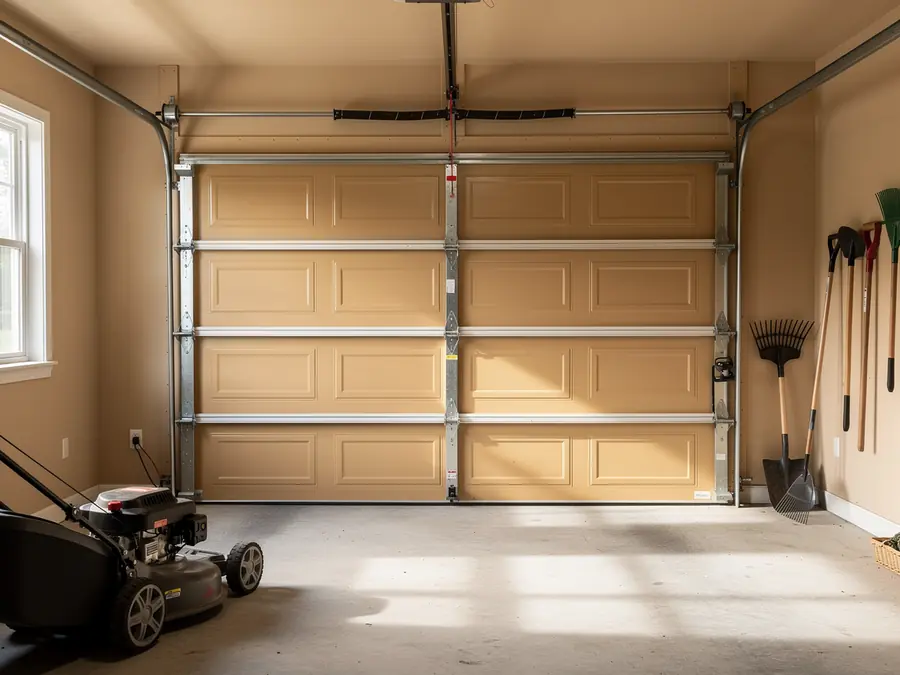
A torsion spring is wound under enough tension to break a bone or worse if it lets go while you're working on it. That's not a scare line, it's why we tell people straight: don't pull the winding bars out on a torsion spring unless you've done it before and you own the right bars for your spring's wire size. Extension springs on the side of the track are a little more forgiving to look at, but the safety cables that are supposed to catch them often weren't added until later code updates, and a lot of the older houses in this service area still have the bare setup.
What you can safely do yourself: check if the spring is actually broken (a visibly separated coil, or a door that won't budge and an opener that strains and clicks), check the cables for fraying, and lubricate hinges and rollers so you're not masking a spring problem as a "needs oil" problem. Beyond that, the math on parts is simple enough that getting the wrong wire diameter or wind direction means a spring that fails again in months, so we'd rather quote the job than sell you a spring kit that doesn't fit your door.
How It Shows Up
Most people don't catch a spring going bad until it's gone. The door feels heavier than it used to, lifting it halfway and letting go to test the balance isn't normal, and if the opener is doing all the lifting instead of the spring, you'll hear the motor working harder and see the belt or chain sag more than it should. A loud bang from the garage, often early morning when the metal is cold and contracted, is usually the spring itself letting go.
On double doors with two torsion springs, one can break while the other still holds some tension, so the door looks like it's working but is only getting half the lift it needs. That uneven load wears out the opener's gears and the cable drums faster than a balanced door would. If your door is from the same era as most of the housing stock around here, built sometime between 1957 and 2003 with a lot of it dating to the 1980s, the springs on it were likely sized for a door that's now three or four decades into its service life, not matched to a replacement panel or added insulation that changed the weight.
What Can Go Wrong
A spring that snaps while the door is open can let the door drop fast, and if the opener's safety reverse isn't working or the cables have already frayed, that's a door coming down on whatever's underneath it. We also see people try to keep driving the opener after a spring breaks, which burns out the motor or strips the gear - at that point you're paying for an opener repair on top of the spring.
The other failure we see often is a spring that's mismatched to the door's actual weight, either from a previous repair done with a stock-size spring instead of a measured one, or from a door upgrade that added insulation or a heavier panel without resizing the spring. That shows up as a door that's hard to open by hand even with a new spring installed, or one that slams down instead of lowering smoothly. We won't put a wrong-size spring back on a door - we'd rather walk you through why it needs the right one than hand back a door that fails again in a year.
What Causes It Around Here
Cold is hard on steel. In a severe cold climate band like this one, the metal in a torsion spring contracts in winter, and a spring that's already near the end of its cycle count is more likely to snap on a sub-zero morning than a mild one - that early-morning bang a lot of homeowners report isn't a coincidence of timing. Repeated cycling through big seasonal temperature swings, summer heat to winter cold and back, fatigues the metal faster than a mild climate would.
Age of the housing stock plays into it too. With most homes in this area built between 1957 and 2003 and median construction landing around 1980, a large share of springs out there are original or are a second-generation replacement that's now also aging out. Original hardware from that era wasn't always rated for the cycle counts we'd spec today, and across the 46 named areas this service covers, the mix of 1980s-90s builds means a lot of doors are hitting spring failure around the same age, just on different streets.
Service areas
Where we work around Blaine
Blaine and 8 nearby communities, each with its own page.
FAQ
Questions about this
How do I know if it's the spring and not the opener?
Disconnect the opener (pull the release cord) and try lifting the door by hand. If it's very heavy, drops on its own, or won't stay at a mid-point, the spring is likely gone or badly unbalanced. If it lifts and holds fine by hand but the opener won't move it, the problem is more likely the opener or the track.
Can I replace just one spring on a two-spring door?
You can, but we usually recommend replacing both at the same time. They're almost always close in age and cycle count, so if one broke under normal use, the other is often close behind. Replacing one and leaving the other is a common reason for a second service call a few months later.
Why did my spring break in winter and not summer?
Cold makes steel more brittle and a spring near the end of its cycle life is more likely to fail during a sharp temperature drop than a mild stretch of weather. It's less about one cold snap causing the break and more about winter being when an already-fatigued spring finally gives out.
Tell us what your door is doing.
We serve Blaine, MN and nearby communities. Every job starts with a diagnosis, so you know what failed before any work begins.